
The Long Way Home
The things that travel with you when nothing else can
WRITER Anna Voloshyna
PHOTOGRAPHER Jason Perry
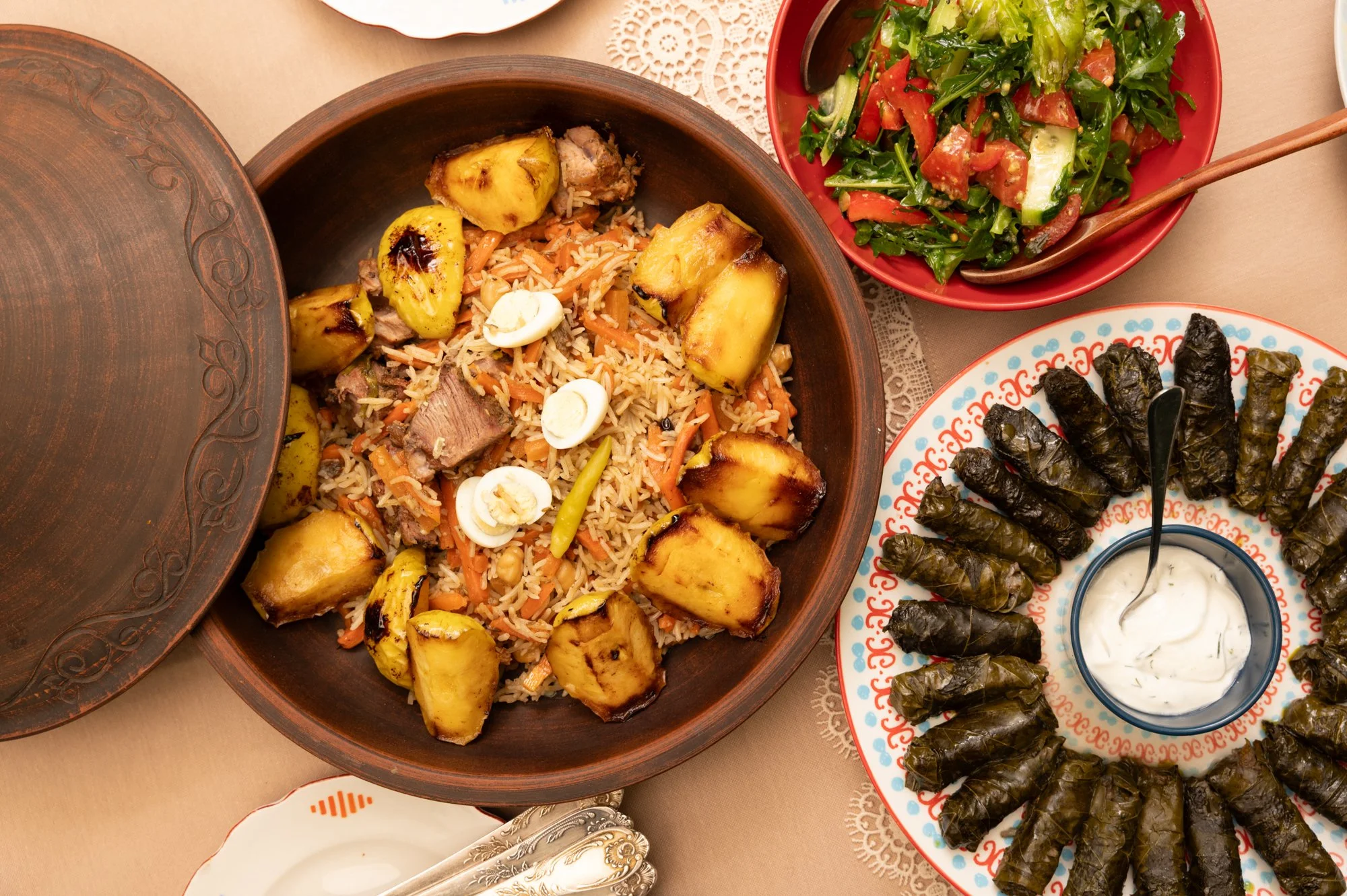
I spent almost every summer of my childhood in Crimea. I remember the shape of those days more clearly than many that came after. Hiking the mountains above the coast. Listening to Crimean Tatar stories told by people who had every reason not to tell them. Lagman soup, rich with lamb and hand-pulled noodles, eaten as the sun went down and the whole sea turned the color of a struck match. My grandmother would pour me a thimble of chilled Crimean white wine, bought that same afternoon from a street vendor of questionable credentials, and even at 8 years old I understood I was being handed something sacred.
I cannot go back. Not now, not yet. Since Russia’s annexation in 2014, those summers have become a flavor I still long for but can no longer fully taste. But this story is not about me. It’s about the people who taught me what it means to belong to a place, because they have been doing it far longer than I have, and they are far better at it.
In 1944, during the Sürgünlik (“exile”), the Soviets loaded the entire Crimean Tatar population into cattle cars and deported them to Central Asia. Thousands died on the journey. Thousands more died in the first years of exile. They were gone for decades. And when the Soviet Union finally loosened its grip, they returned. Not just some of them. Not eventually. They came back right away, in the tens of thousands, to a peninsula that no longer held their houses or orchards or even their names, and they started again from nothing.
Then 2014 came, and it happened again. Activists were arrested and silenced. Some disappeared. Some were killed. For many Crimean Tatars alive today, this is the second displacement of a single lifetime. And still they hold on. Still they say, “This is ours, and we are going back.” I have never met a people more rooted in a place, and I think it is precisely because that place keeps being taken from them. Rootedness, it turns out, is not a passive condition. It is something you do, over and over, with your hands. Which brings me to plov.
Last year in Lviv, I spent a day in the kitchen of a Crimean Tatar chef named Lerane Haibylaeva. Lerane is a petite woman, very quiet, as strong people often are, with a steady fire of resilience burning beneath the calm. She left Crimea because her work in the resistance made staying there dangerous, and she carried her kitchen with her wherever she went.
We cooked all afternoon. We talked, we laughed, and at some point, as happens in Ukrainian kitchens, we cried. She made plov, and she told me a story of plov. Plov is not originally a Crimean Tatar dish. It became one in exile. Deported to Central Asia and stripped of nearly everything, the Tatars found themselves among people who cooked a bountiful rice dish with lamb, carrots, and fistfuls of fragrant spices, and they fell in love with it. They learned it. They made it theirs. And when they finally came home after decades away, they brought it with them, carried in their memories.
Think about what that means. The most celebratory dish on the Crimean Tatar table exists there only because of a crime committed against them. It is the food of a forced journey transformed into the food of homecoming. Every platter of it says: They sent us away, and we came back richer than we left.
That evening, we set the plov down in the center of the table, crowned with seared apples and juicy chunks of meat, just as I remembered it from my mother’s celebrations when I was small. Friends gathered. Glasses were raised. We toasted to a future where Crimea finds its way home to Ukraine, where we can walk those shores again and eat lagman as the sun goes down.
The war was in the room with us. It always is. But so was something older and more stubborn: the undeniable conviction that we will get back there. That the mountains and vineyards and limestone caves are waiting. That the Black Sea is still there, as it has been for thousands of years, ready to hand us its anchovies, its flounders, and its impossible sunsets whenever we are able to return.
I make plov now in California. It takes most of an afternoon, and it serves at least eight, which is no accident. This is not a dish you make for yourself. People can be moved off their land, their language can be pushed into the shadows, their dishes renamed and repackaged as something generic and unthreatening. But you cannot force people to forget what they hold close to their hearts. It travels in the body. It gets handed to the next person, and the next, waiting patiently until the road home opens again, when they can set the platter in the middle of the table and invite more people than they have chairs for.