
Painting The Tension
Laura Rokas transforms vintage recipe cards into art that questions what abundance really means
WRITER/PHOTOGRAPHER Melody Saradpon
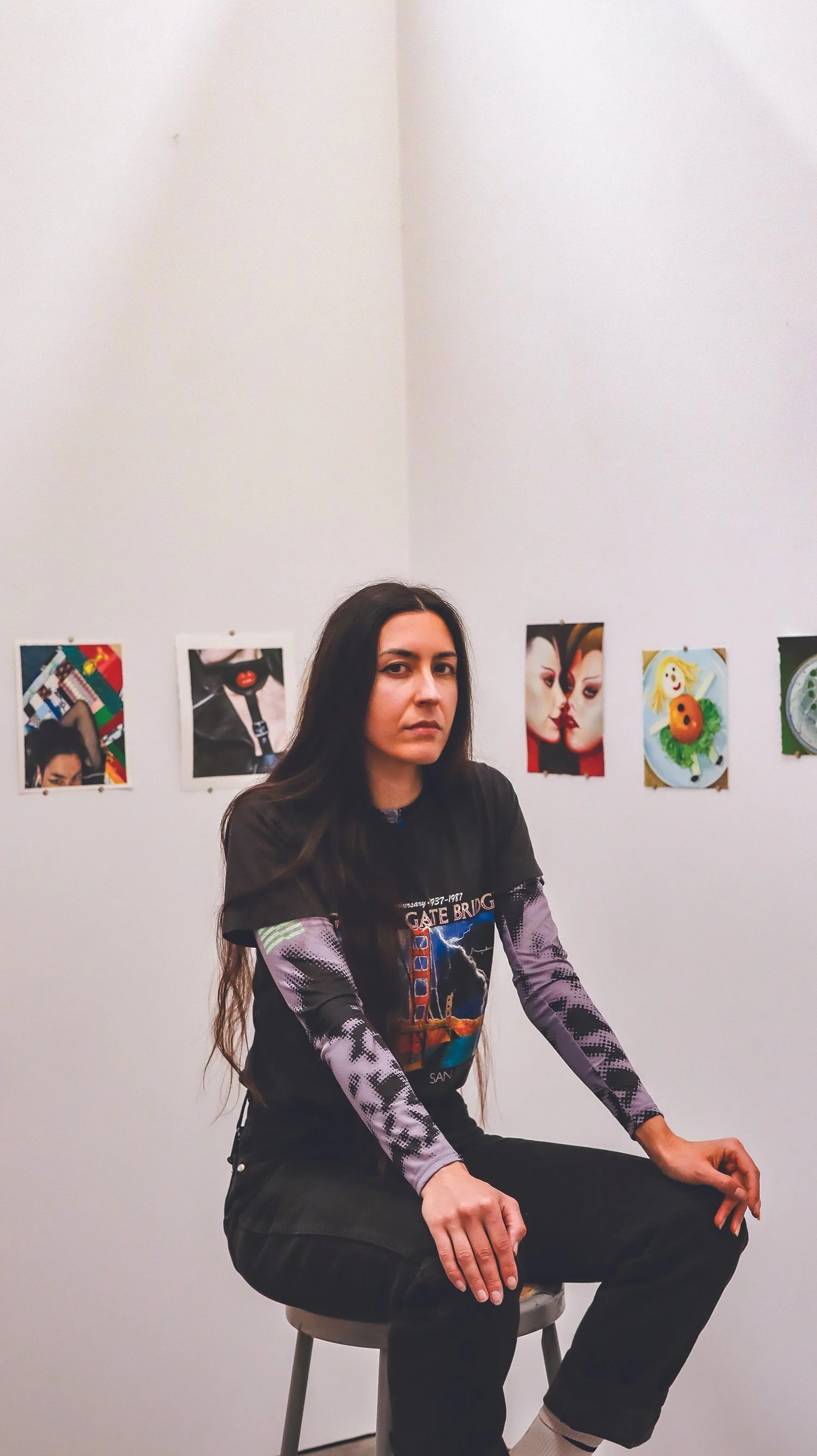
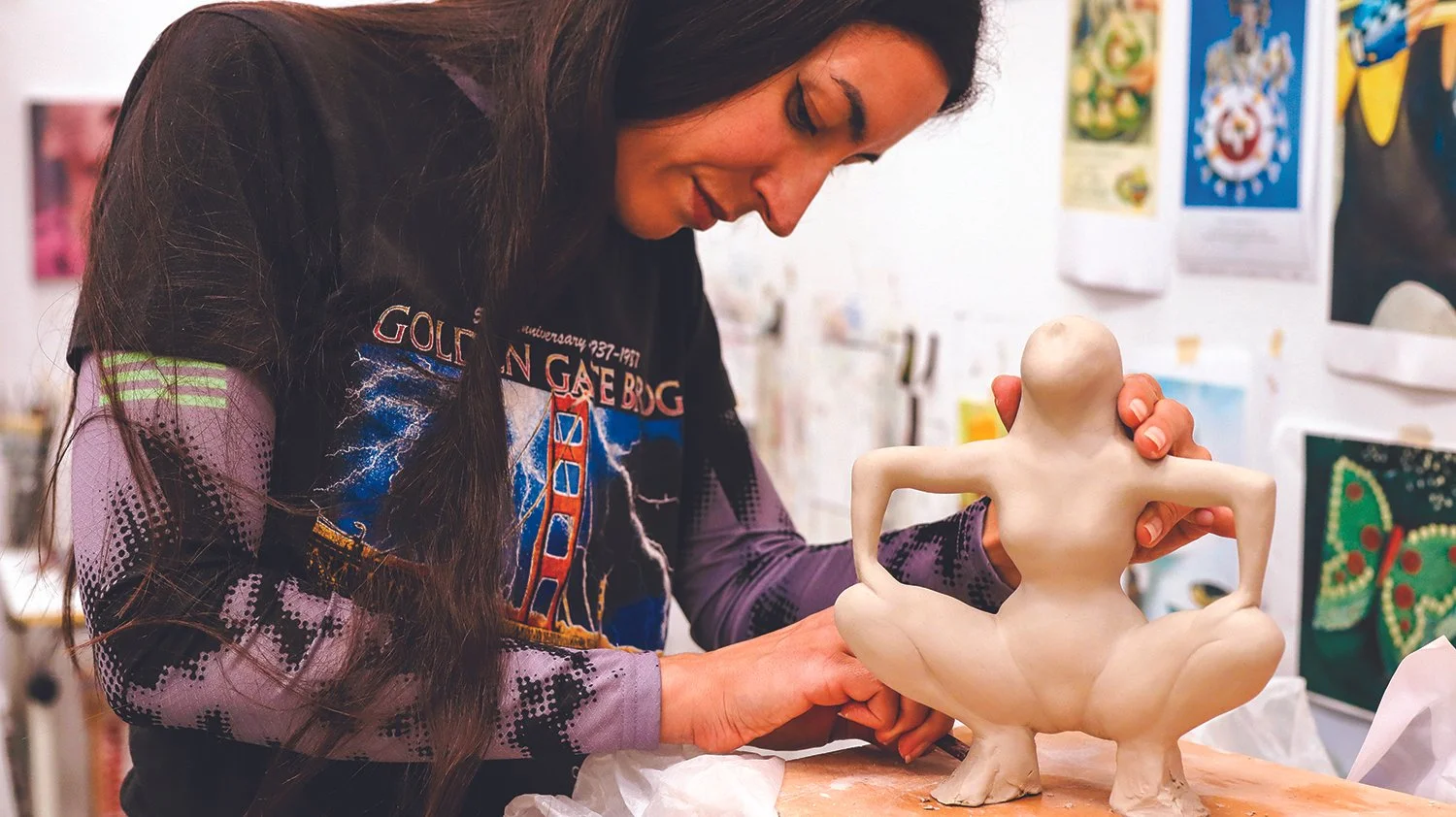
Laura Rokas at her art studio at Minnesota Steet Project.
Growing up in rural Quebec, Laura Rokas’ family never ate out. Her mother cooked everything from scratch while young Laura watched Jacques Pépin and Julia Child on television, mesmerized by the simple transformation of ingredients into meals. There was no excess, just the honest work of feeding a family.
Everything changed when she moved to San Francisco to study at the Art Institute in 2014. Working across oil painting, sculptural ceramics, and photography, Rokas discovered vintage 1970s recipe cards—artifacts from when convenience promised freedom but delivered exhaustion.
“Abundance doesn’t mean when something is unlimited, it’s positive...there’s a range within what is actually good for you. Abundance can be over the top.”
Her paintings excavate a uniquely American paradox: when having too much became its own form of deprivation. These recipe cards document an era when women could make anything from convenience foods, but still had to make everything to prove their worth. The tension is built into her source material: Betty Crocker promised indulgence; Weight Watchers preached restriction.
Rokas paints the precise moment when abundance becomes anxiety, which is why her work commanded our Fall cover. She’s captured the tension of our theme: how plenty can become a prison, and how having everything can mean having nothing at all. Here, Rokas tells us about painting the feast that eats itself.
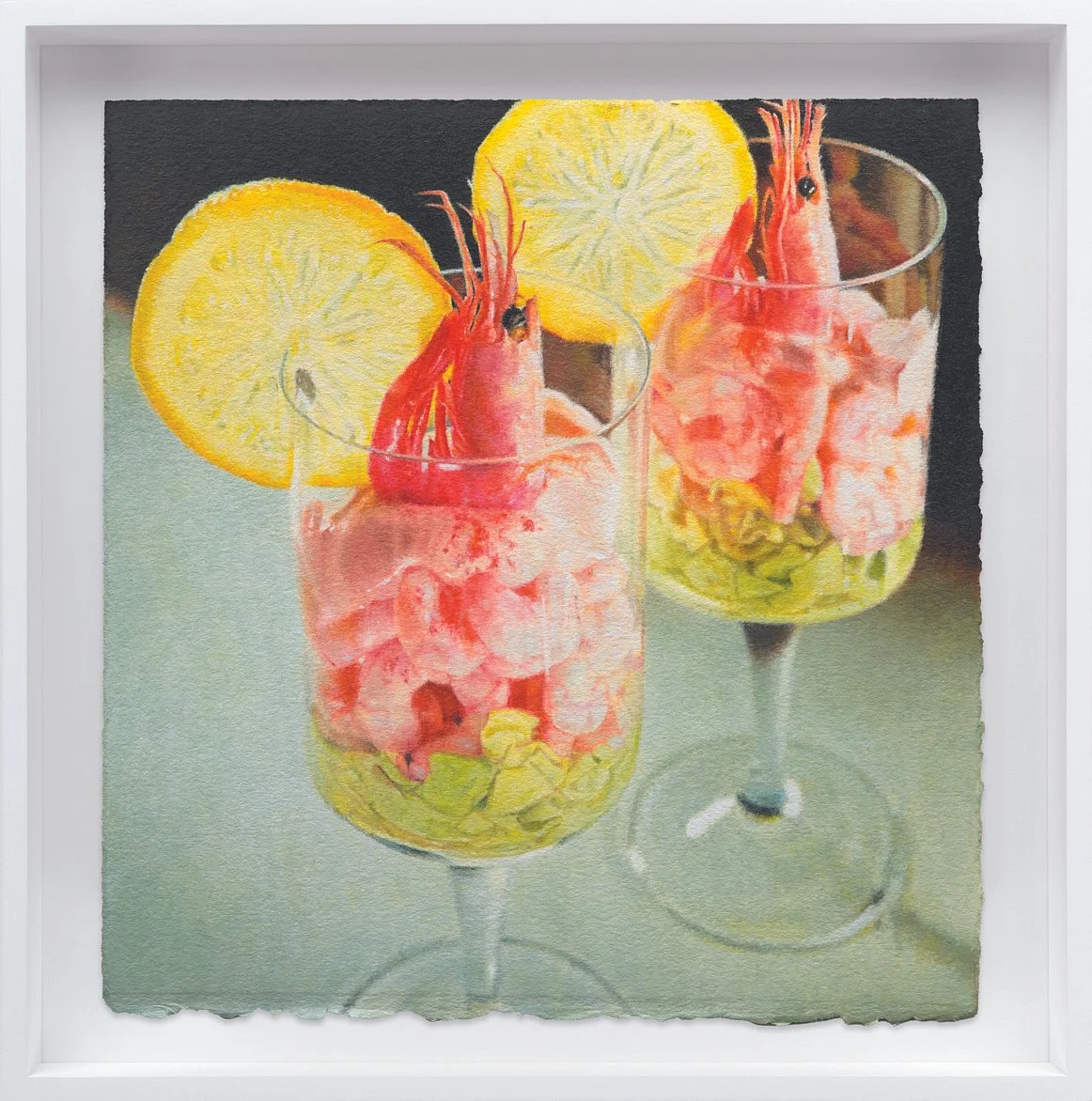
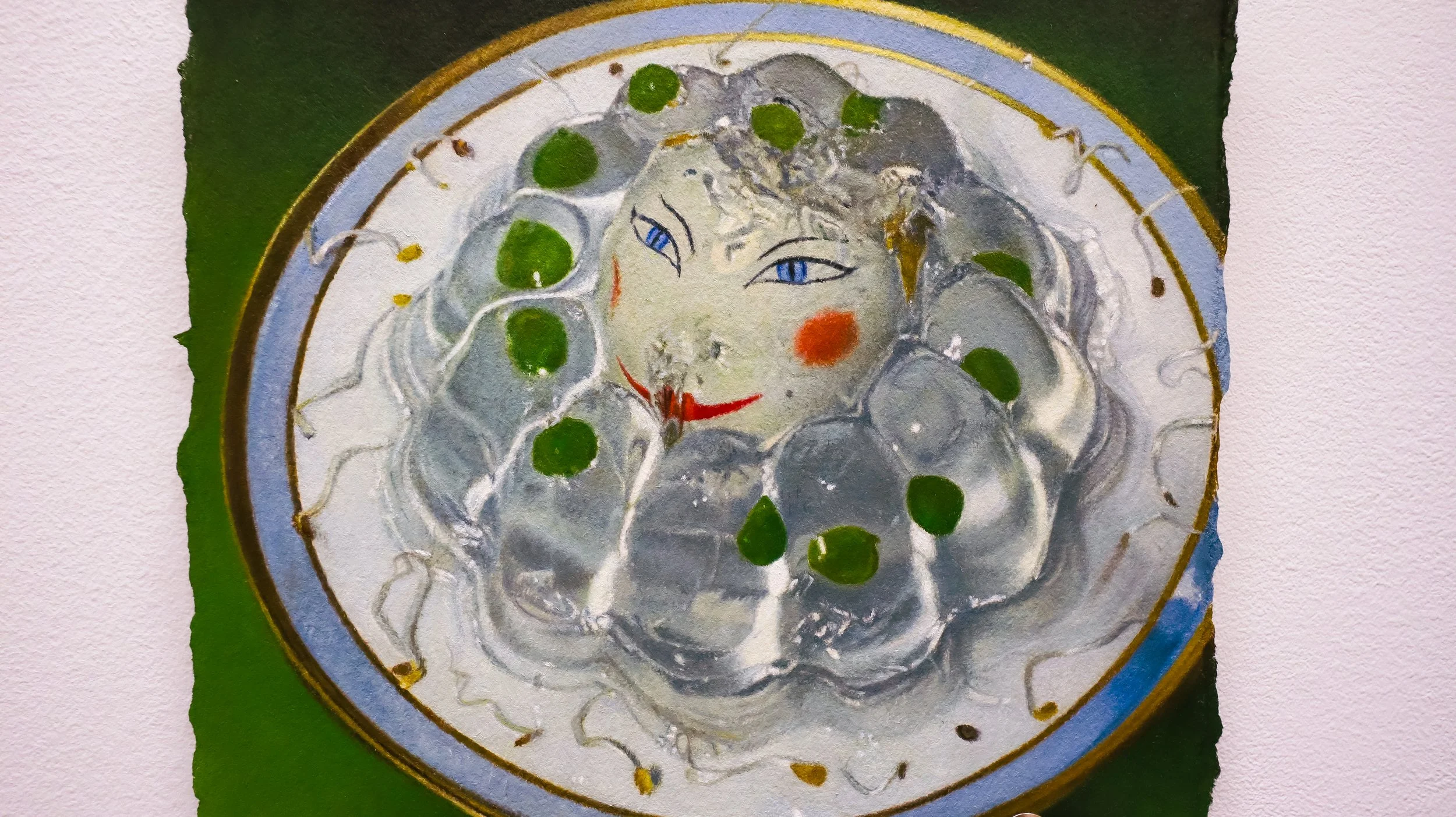
Replicating vintage recipe cards from Betty Crocker and Weight Watchers is symbolic. The Weight Watchers philosophy is restraint/restriction, and Betty Crocker is baking, abundance, and excessive…
Laura: You can even tell the difference with the cards—all the Weight Watchers have artificial sweetener. There’s a section for calorie counting…they don’t directly say it’s for losing weight, but we all know what it stands for.
How do you find the duality within these selections [to paint[ in terms of what they represent?
It’s nice to have a mix of something appealing juxtaposed with something definitely more off-putting. As long as there’s tension in the assortment of images… abundance doesn’t mean when something is unlimited, it’s positive. There’s a range within what is actually good for you. Abundance can be over the top.
Your collection ‘A Meal In Itself’ speaks to this. Which painting captures the complexities of abundance?
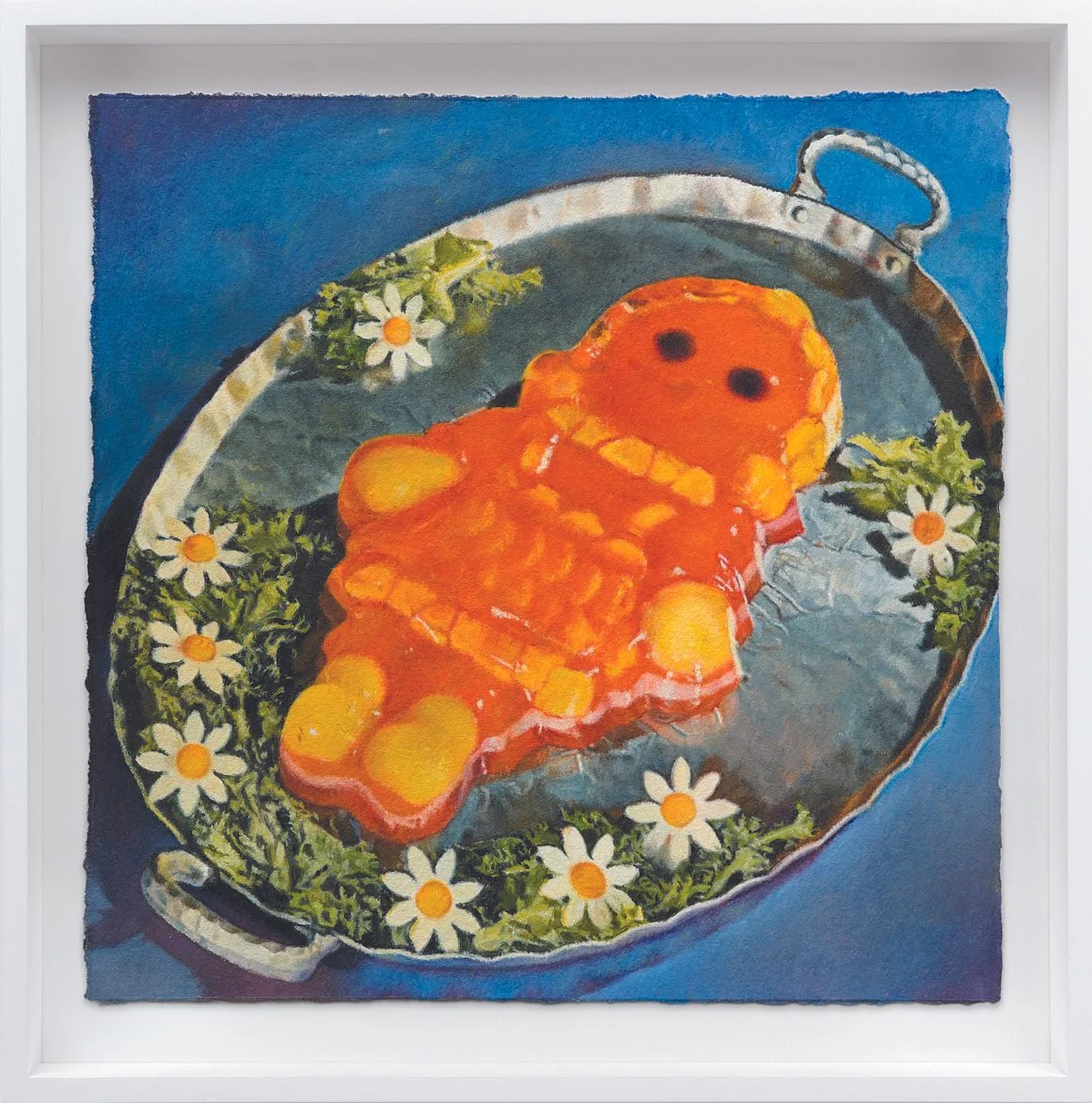
The one that comes to mind is ‘Serves You Right’. It’s the one with the eggs and orange JELL-O. It’s very beautiful—the light just bounces through these stained glass JELL-O eggs—but it’s extremely gross. It has anchovies on top and an olive. And the way it’s presented, it’s like you’re serving your guests. The title is cheeky, like, “Yeah, serves you right, you ordered this disgusting shit,” and it’s this gross meal that I’m serving to you as a gift.
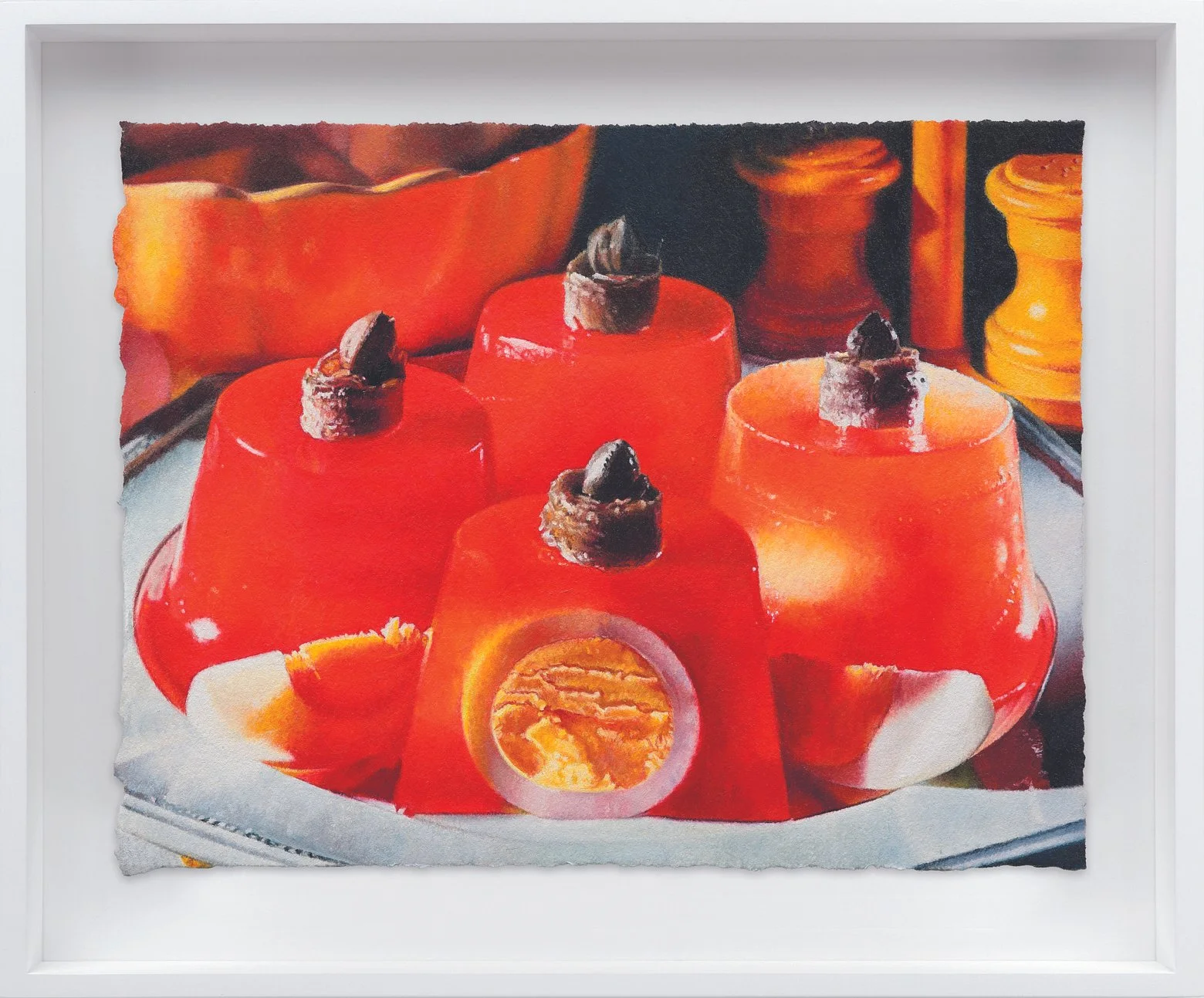
‘Serves You Right’ by Laura Rokas. Image courtesy of Rebecca Camacho Presents.
When you’re painting these salmon aspics and jellies, what goes through your mind?
Humor and horror. I love horror movies. I’m very attracted to repulsive things. Within context [laughs]. Practical illusions in old Cronenberg movies, all the body horror. [I] really love that, which also has a lot to do with the sculptural aspects of things.
How do you feel the abundance trap has evolved in 2025?
The [biggest] change is the luxury aspect of abundance. Now people have access to seeing people have access to luxury—we’re seeing abundance as luxury. Ignorance is bliss. If I can’t see a billionaire eating a $1K can of caviar, then it can’t hurt me. But now people are seeing that [on social media], people are aiming for that versus just being satisfied.
San Francisco has over 3,000 restaurants and more than 130,000 food-insecure residents. How do you feel this mirrors the abundance paradox of your paintings?
San Francisco is such an interesting place to be. There’s so much here. So many resources. California is such a fantastic place for food and agriculture, but there’s an aspect of that that’s off-putting: there are so many rich people here and so many inaccessible things… There’s so much food. There’s so much waste. We can make do with what we have."
Follow her on IG: @laurarokas