
Out of Whites
The chef’s coat set down. The space between service and persona.
INTRO Melody Saradpon
INTERVIEWS Sonya Yu
PHOTOGRAPHER Heath Visuals
STYLIST Tyson Lee
WARDROBE Modern Appealing Clothing
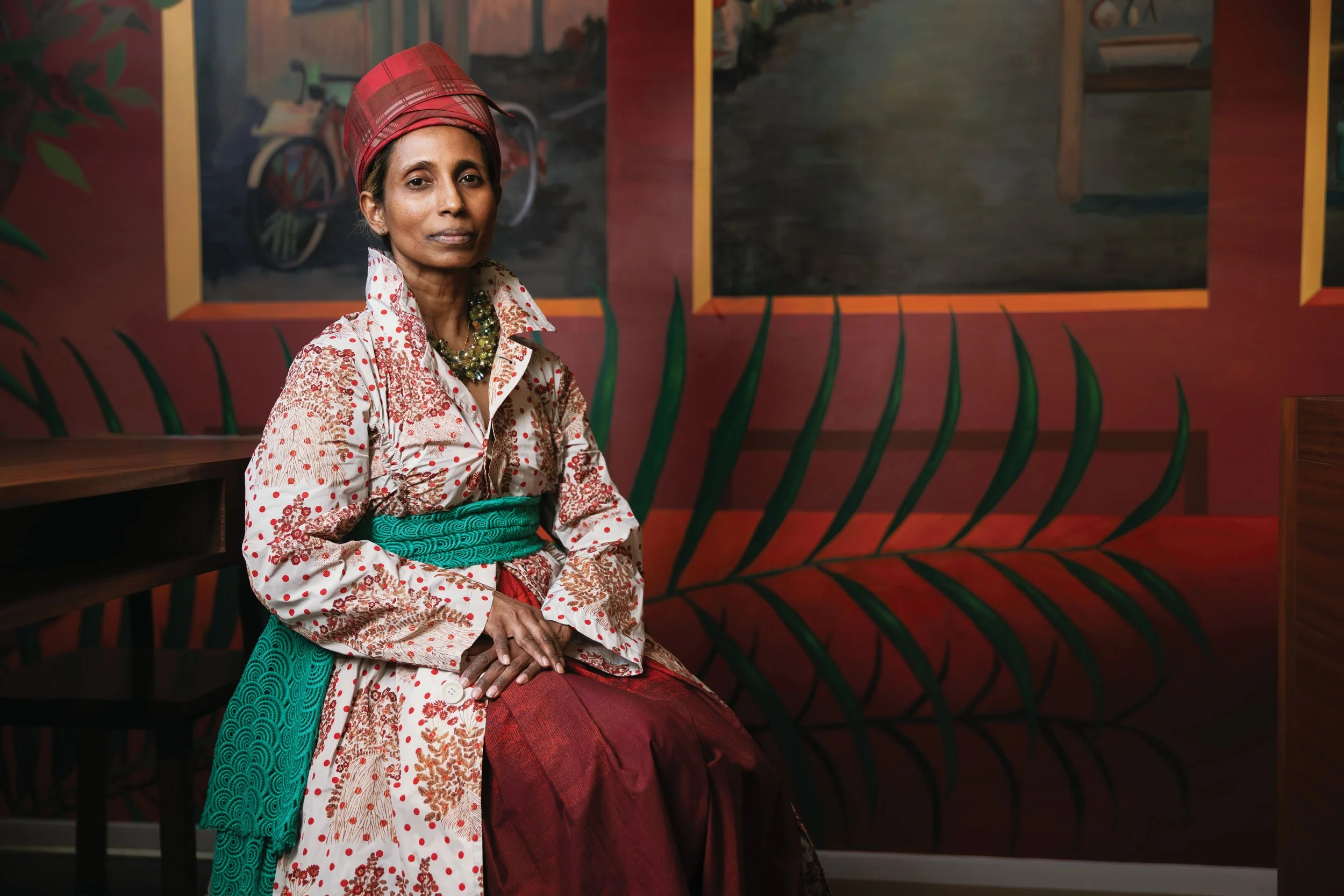
Azalina Eusope of Azalina’s is wearing TAO Comme des Garcons overcoat, Casey Casey ombre skirt, her own personal tengkolok, fabric sarong, and necklace
White is the one color that shows every mistake. To wear it while cooking on the line in a restaurant kitchen is a small, daily dare.
The chef’s uniform—tall pleated hat, double-breasted coat, all in white—is usually traced back to Marie-Antoine Carême, the Parisian chef who, sometime around 1822, is said to have drawn and worn the first version of it. Carême baked architectural pastries for Napoleon and George IV, and is often credited as one of the first chefs to treat food as art. The discipline behind the pastries showed in the cooking. White was the riskiest color a chef could wear, and he could afford to. The uniform meant cleanliness, and nothing to hide.
Two centuries later, every cook on the line in every serious kitchen puts on some version of this self-portrait. To put on chef whites is to become a chef. They go on as a ritual before service and come off as another at the end of it.
For this issue, we wanted to know what would happen if we took them off. We asked four San Francisco chefs to step out of theirs, and into a styled look chosen by someone else. Two portraits, with the chef somewhere in between. Our interviewer Sonya Yu sat with each of them in the space between the uniform and what it covers: self-expression, lineage, and the people they cook for.
Interviews have been condensed and edited for clarity.
DAVID BARZELAY
Delicious is the easy part. That’s David Barzelay’s line. Jou Jou, his third restaurant, is the first menu in a decade he calls fully his own. Every recipe on it is his.
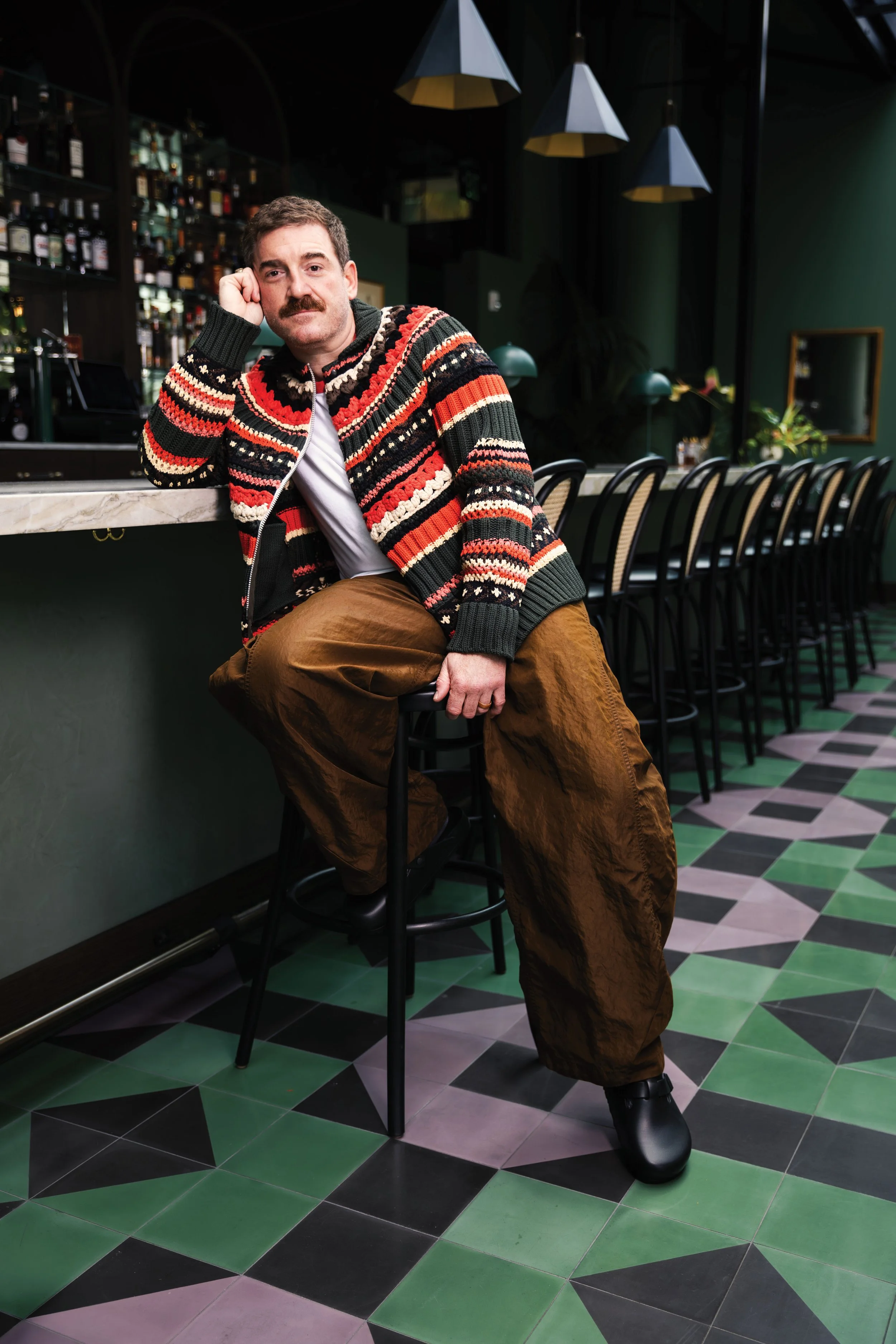
David Barzelay at Jou Jou. Wearing Sacai zip crochet cardigan and nylon twill trousers.
Sonya Yu: How does fashion fit into your life and how does it play into your food?
David Barzelay: I’m pretty into fashion. I put effort into what I wear and how I look. It’s part of how you express and define yourself to the world. I’ve always been into the idea of wanting to be deliberate about the aesthetic that I’m putting forward in all scenarios—whether that’s the vibe I’m creating for a restaurant or the vibe I’m creating for myself. For me, it’s very easy to come up with something delicious. Delicious is very easy. It’s much harder to come up with something that is conceptually unified and interesting and expresses unique things about yourself and the restaurant and your locality. That’s much harder. Then when you come up with something inspired and special and you taste it, you go, “Oh, it’s not that delicious.” For me, it’s a pretty easy step to make it pretty fucking delicious. That’s the easy part.
SY: What’s the ritual behind starting the creative process for you?
DB: I don’t really have any particular ritual. I get more frequent inspirations when I’m actually in the kitchen and cooking. I tend not to make anything the same way twice. I’m very deliberately tweaking little things about the process every single time I’m making something. The recipe may be the recipe, but I’m never following that recipe. Not a single time will I follow that recipe without adjusting things a little bit.
SY: Tell me about the recipes at Jou Jou. Have you been holding onto them for a while?
DB: The Jou Jou menu is French, but there’s a lot of inspiration from the French diaspora—French West Indies, French Polynesia, even New Orleans and some Quebecois food. A lot of these are things I’ve been holding onto for a very long time. Things I really wanted to put forth into the world and couldn’t at my other restaurants. There’s a prime rib of pork on the menu; it’s basically exactly the way I make it at home. I’ve been making it for 10 years. It’s fairly Southern, the way I do it at home. I was, like, “It’s so good, but I think it’s too Southern for the Jou Jou menu.” And then I was, like, “Wait a minute, I think I can make it just French enough to get away with it.”
SY: What does it mean for you to be in chef whites?
DB: For me, if I’m not cooking, it feels false to wear chef whites. At this point in my career, there are lots of days where I don’t cook anything all day. People are bringing me tastes of things and I’m, like, “Add more of this or less of this.” So I tend to not put on chef whites until pre-shift or service. I have a lot of guilt about that, actually. I own the fact that I’m a laptop chef, but you still have to maintain a respect and relationship with the people that are busting their asses in a different way from the way you’re busting your ass.
SY: Are you pushing yourself out of your comfort zone in the kitchen?
DB: I would say it’s the opposite. I’ve been pushing myself into the comfort zone. Pushing myself to not feel like I have to do anything other than what that fucking thing ought to be. I got mature enough as a chef, or maybe I just won enough accolades, to stop feeling like I had something to prove.
SY: Does that apply to fashion too—pushing you into the comfort zone?
DB: Some days you want to be in your comfort zone in what you’re wearing. Some days you have to push yourself a bit, to where you’re not fully comfortable. Where you need a little validation from the first few people who see you and you’re, like, “Tell me this doesn’t look ridiculous.” If you’re not doing that at least a little bit, you’re probably a lot more boring than I want to be. I’m a 43-year-old man. If I’m fully in my comfort zone, I’m probably not maintaining my coolness forever. Whether it’s food or fashion, you always have to be looking inward and outward for inspiration.
SY: What part of your identity doesn’t make it onto the plate yet?
Growing up in Florida, there’s a whole version of redneck Florida food that I would love to do. [laughs] Jou Jou’s definitely not the right place.
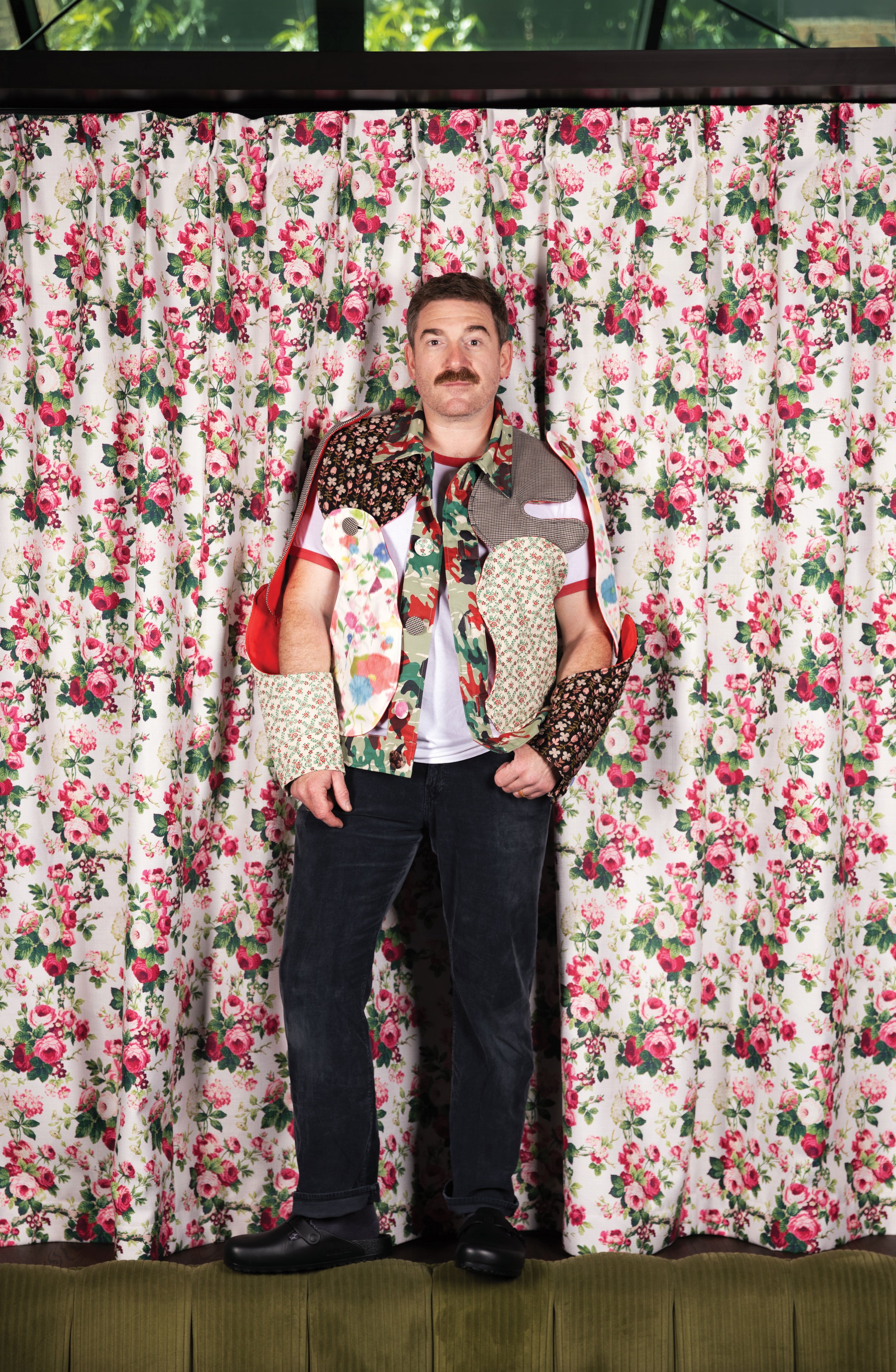
Barzelay in Walter Van Beirendonck cutout patchwork jacket with Barzelay’s own ringer tee, corduroy Levis and clogs.
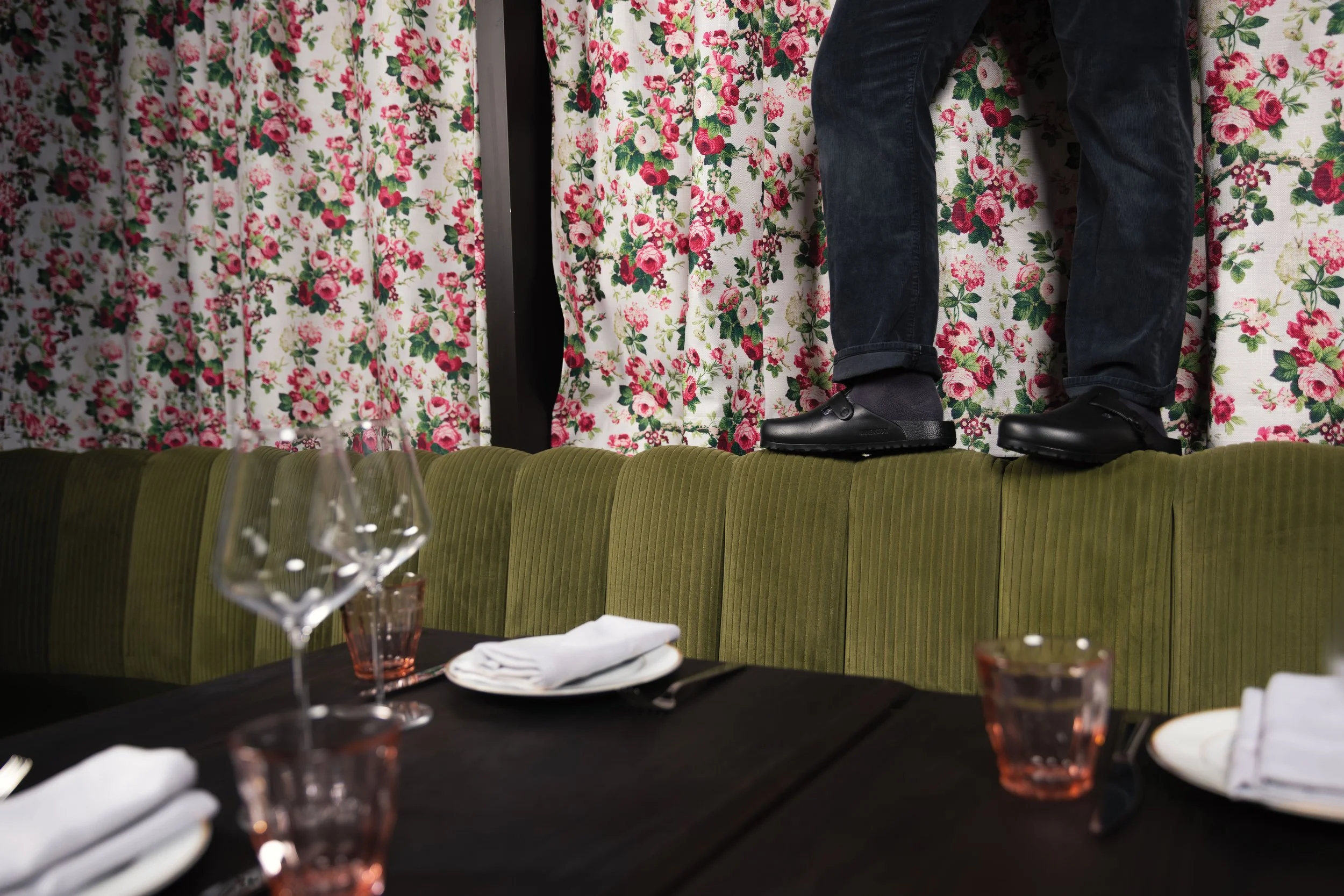
“If you’re not doing that at least a little bit, you’re probably a lot more boring than I want to be.” —David Barzelay
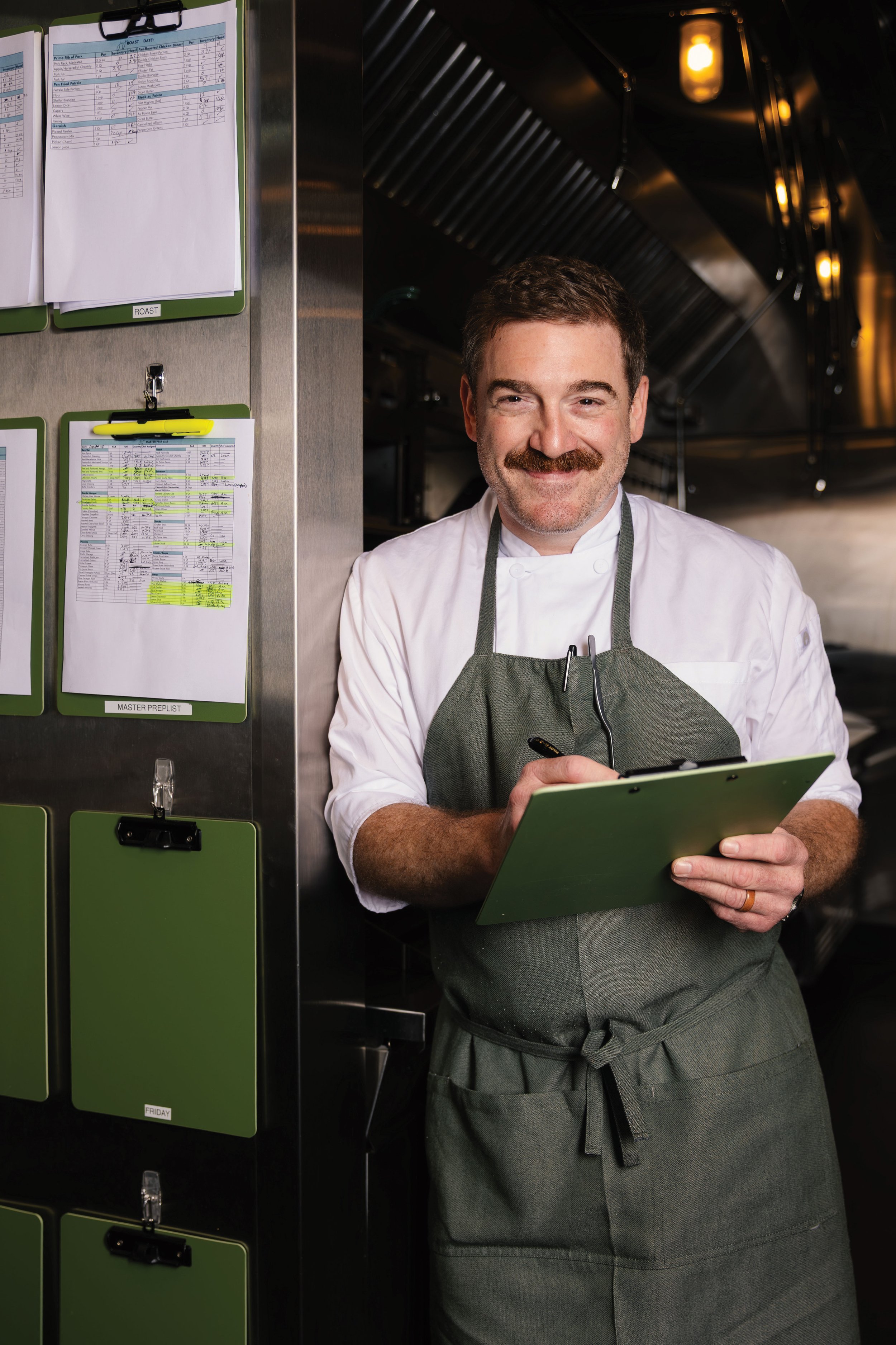
Barzelay ready for service.
AZALINA EUSOPE
Azalina Eusope is the fifth generation of street vendors in her family from Penang, Malaysia. At Azalina’s, in the Tenderloin, she calls herself a cook, not a chef. By her own description, she has become the unofficial historian of Malaysian food.
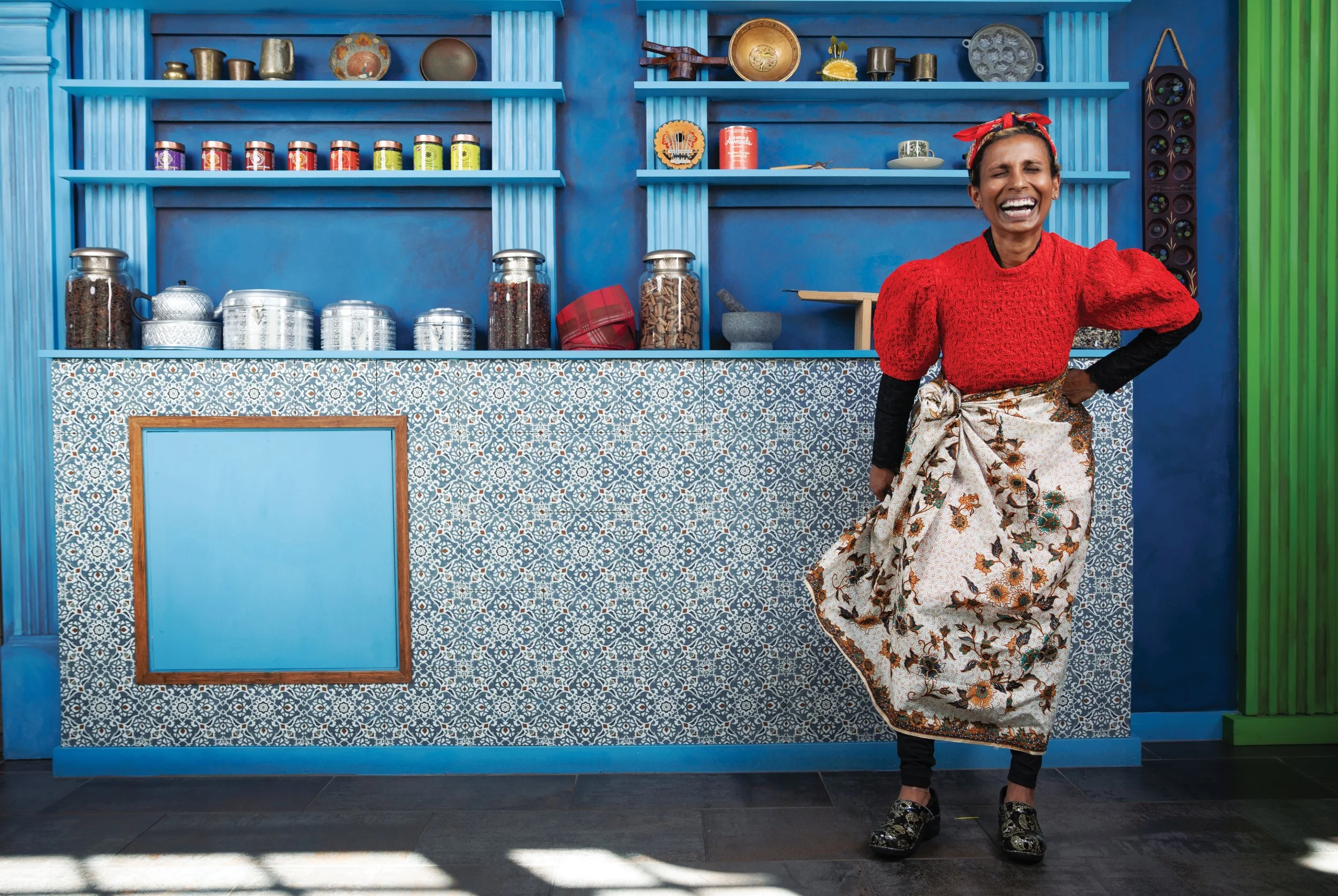
Eusope wearing Cecilia Bahnsen red dress, her own personal Malaysian batik sarong and clogs
SY: How does it feel being in clothes that you might not normally choose for yourself?
Azalina Eusope: Very much different and almost not real. I’m, like, “Is this really happening? Am I wearing this?” I can’t see myself in it because I’m not familiar with wearing beautiful clothing that someone’s there to adjust it.
SY: Tell me about what you wear during service. The metaphor of whites.
AE: I don’t wear white because I am a fifth-generation street vendor. Street people have no rules around what they wear. They don’t think about themselves. They only think about what they’re doing—pouring that feeling of love and intention [into their food]. They’re selfless. I don’t even call myself ‘chef’; I just call myself ‘cook’. It’s the most comfortable way, even in my own mind: I’m just a cook. I’m just trying to tell the story of my people.
SY: Where do you bring in the ritual and structure to your process?
AE: It’s a discipline. I was very ill about 10 years ago, so I don’t have sense of taste. It’s all sense of smell. My discipline gets heightened up because I’m cooking [only] through smell. My sense of smell is tight compared to others. I can wake up and smell the air and know something’s off. My people can see colors. Colors and sense of smell—there’s a coexistence within our community. It’s a gift.
SY: Who are you, then? What do you feel comfortable in?
AE: Cooking as a business takes more responsibility. It’s serious because you are cooking to feed people. My goal is always to tell stories about these amazing [Malaysian] street vendors that always die with just dirt to their name. There’s nothing else to them. So my intention is always: How do I tell the stories in this particular dish? Each course tells a story about a different community. My fisherwomen [vendors] don’t even use nets, they only do line catching. These are third-generation Cambodian women. So how do I tell their story? I’ve become this unofficial historian of Malaysian food.
SY: Has it reached anyone outside the community?
AE: I had a guest that has been coming to the restaurant many times. We change our menu every four weeks. This one particular dish I’m making [is] onion jam, [and] he starts to cry. And he’s Japanese. He said, “This dish just moved me.” I started to cry. Then I felt so special that I had made this dish, even though I didn’t grow up in [his cultural] community. I always believed since I was a kid: music, food, and stories are the only link to humanity. You might grow up someplace else, but through a certain flavor, it just clicks.
SY: How do you want to be seen?
AE: This restaurant, Azalina’s, is about the stories of people coming to this [Tenderloin] neighborhood for a second chance. I came to this neighborhood for a second chance. Would you give us that second chance? If I get to go one step further, I should be able to bring a bunch of folks with me onto that next step [to uplift community]. That’s how I feel good and I sleep better at night.
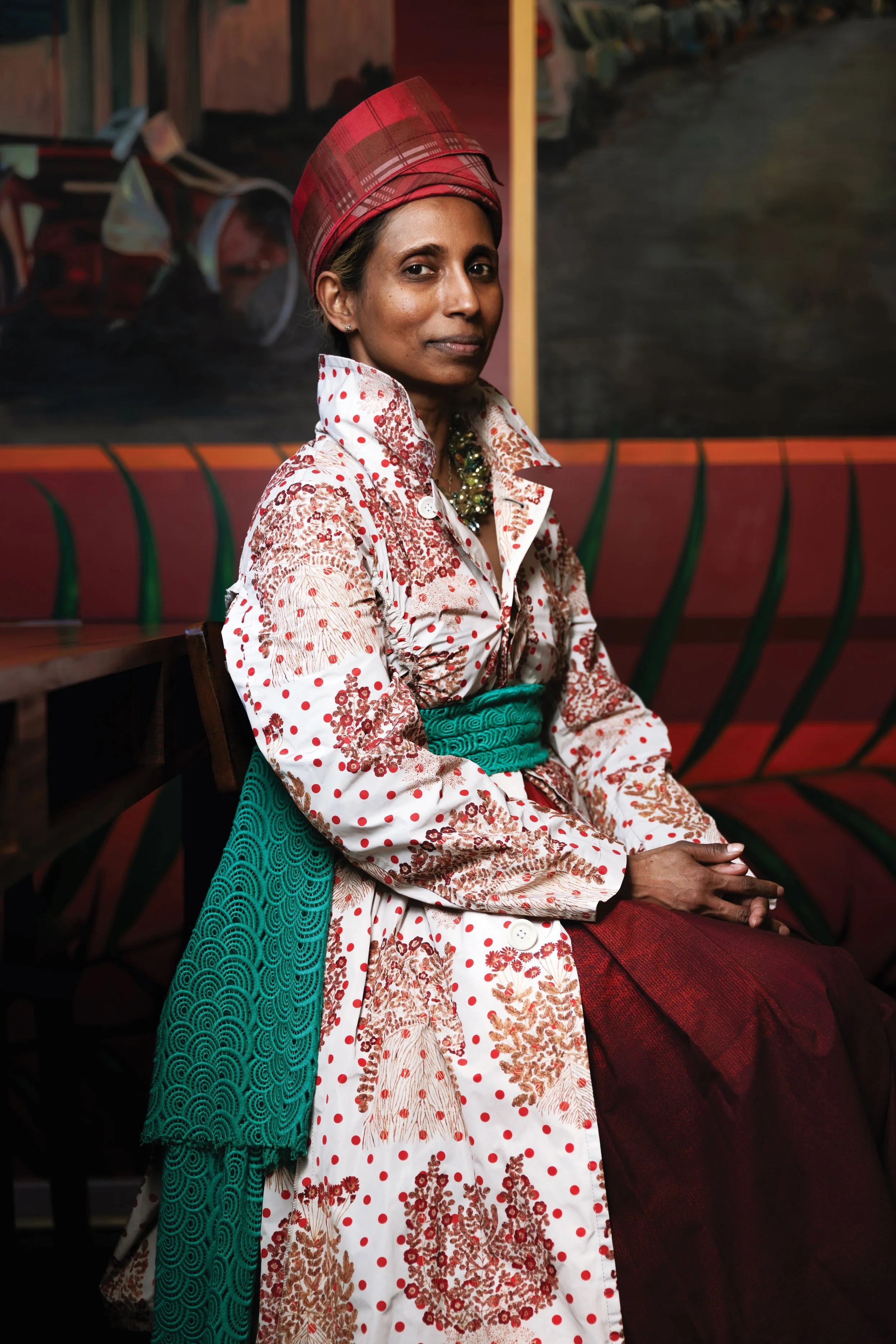
Eusope is wearing TAO Comme des Garcons overcoat, Casey Casey ombre skirt, her own personal tengkolok, fabric sarong, and necklace
“Music, food, and stories are the only link to humanity.”
—Azalina Eusope
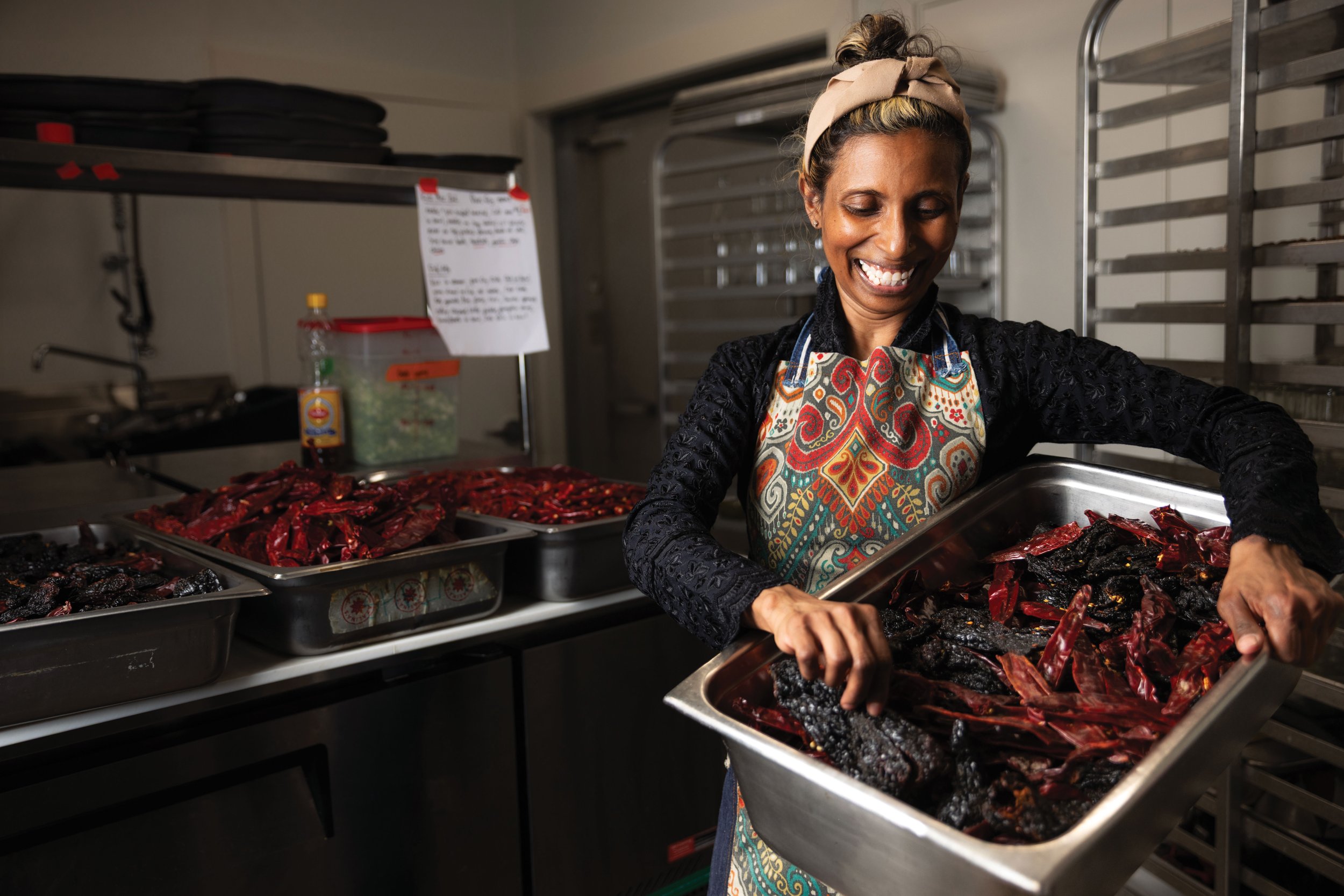
Eusope’s preferred street cook style
RYAN SHELTON
Ryan Shelton imagines worlds and then builds them. Four times a year, Merchant Roots becomes a different one: interior, dishware, and menu remade from scratch. Bar Orso, the bar within, stands apart. The whites are what holds across worlds.
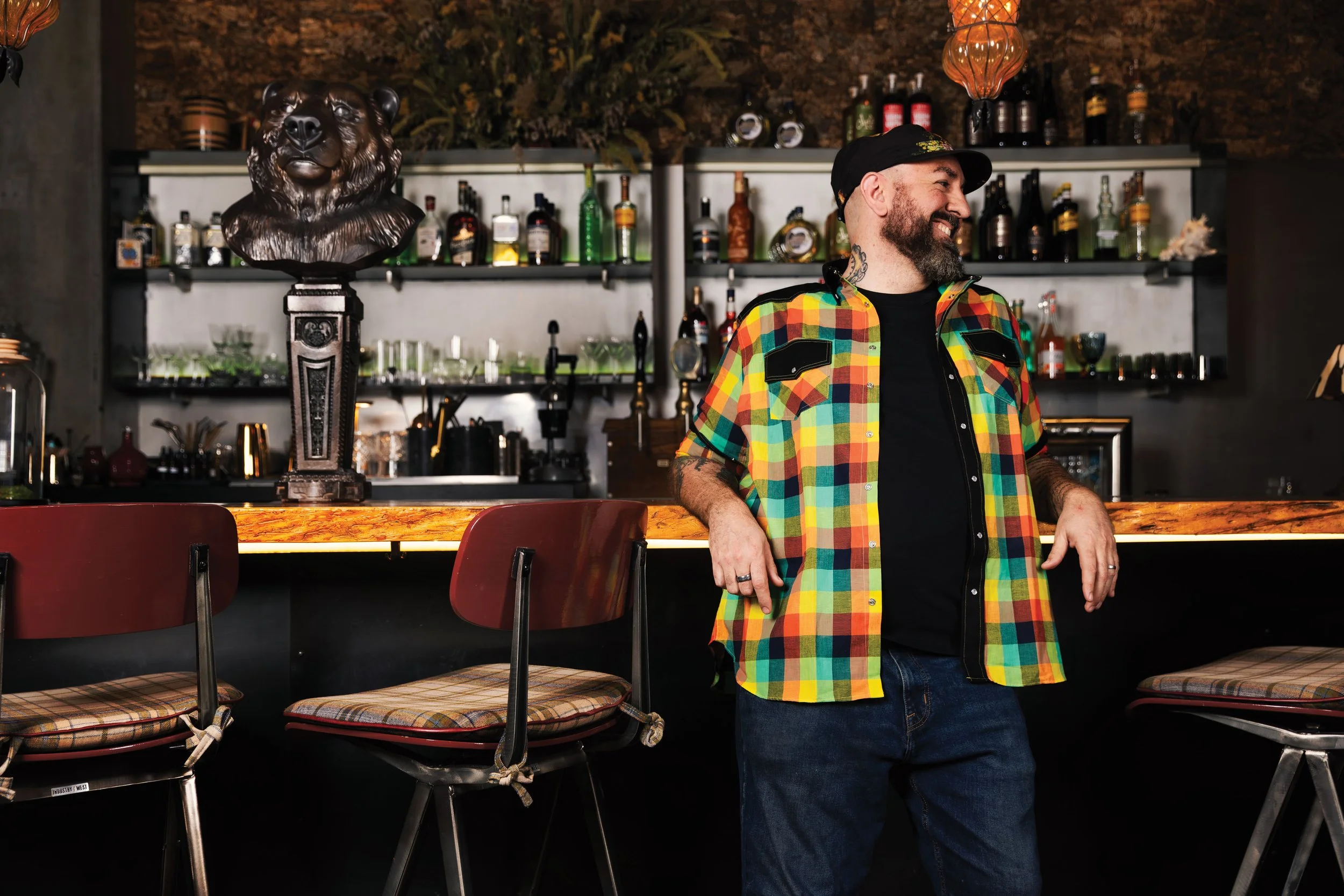
Ryan Shelton at Bar Orso wearing Gutman Vintage multicolored short sleeved shirt, Undercover x Emma Bennet floral print hat
Sonya Yu: What do your chef whites mean to you?
Ryan Shelton: The boring answer: It gives you the ability to look like part of a team. The weirder thing is that we’re so thematic—we transform [Merchant Roots] completely for our guests, four times a year. But the one line we never cross is costume. Then we’ve gone from a themed restaurant to Medieval Times. The whites are a really important anchor point. They tie us down to the core of what this is, which is hopefully really good, world-class food.
SY: What’s the non-boring answer?
RS: I like to be a bit low-key in general. Chef whites are very present. They’re very bold. Everything about the structure of them is traditionally masculine: shoulders, broad chest. For me, when I put on whites, it makes me feel present. Makes me feel leaderly, knowledgeable, confident.
SY: And out of them?
RS: I was hoping to get pushed today. I’ve made a very nice quiet cave for myself here—everything that happens is something I’m very comfortable with. I’m getting older and I’ve gotten real good at avoiding things that put me out of my comfort zone. So there’s very little of that these days. Outside whites, I gravitate toward a more timeless style. At home I have a lot of bracers and bow ties, nothing too outrageously hipstery. I like to dress appropriate for the occasion. I’ve never been a particularly casual person. Low-key but not casual. Done up, but quietly to the side. For me, that works well.
SY: When you’re coming up with these [seasonal] themes, are you leading with your eyes or your taste buds?
RS: It definitely always starts with the eyes. We really want to create a food style here that’s retroactive. We want to call on food memories. We don’t want to take people to places that they’ve never been and would spend most of their brain trying to understand. I’m not going to make fish and bananas work really well. The visual cues call up memories. The food basically just needs to be the killing blow: the final little piece of the puzzle that ties it all together.
SY: How do you make all this happen: the dishware, the staging?
RS: There’s a sign in the workshop that says, “Fuck you, I’ll make it myself.” And that’s a big thing for why we make the things that we have here. It’s not because I think we’re gonna be the best at it; it’s just because it doesn’t seem to already exist in nature. So we’ll figure it out. We had a dish that for almost a year I couldn’t find someone that could make us: It had a built-in face. So many people told me, “Can’t be done.” A glassblower told me it’d be possible, but it’d be $250 a plate. I just get so sick of people not giving me the answer I want that we’ve ended up acquiring all these [ceramic and carpentry] skills over the years.
SY: What are your rituals?
RS: Every night when we drop the lights, turn on the music, put on the whites, it mentally puts us in the mood. My Chef de Cuisine JJ started this culture of a have a good service fist bump. We all walk around and do that casually as we see each other. It starts the drumbeat in your head, “Here comes service.”
SY: What about rituals outside of the kitchen? Who are you cooking for?
RS: I have a toddler. He’s going to be 3 in May. He has the opposite of me: He has very long hair. We’ve already had to cut it; it’d be down to his butt by now. I comb and tie it up, get him ready for school, five days a week. It’s my favorite ritual. Since my son was born, what I really want is to make sure that I’ve built something where he can see what it is to achieve a dream. He can see what it is to create greatness and to lead a team to greatness. Now the inception point for all of my inspiration is wanting to make something I could show him. I think that’s why I approach it with a little bit more intensity.
“We’re so thematic—we transform [Merchant Roots] completely for our guests, four times a year. But the one line we never cross is costume.” —Ryan Shelton
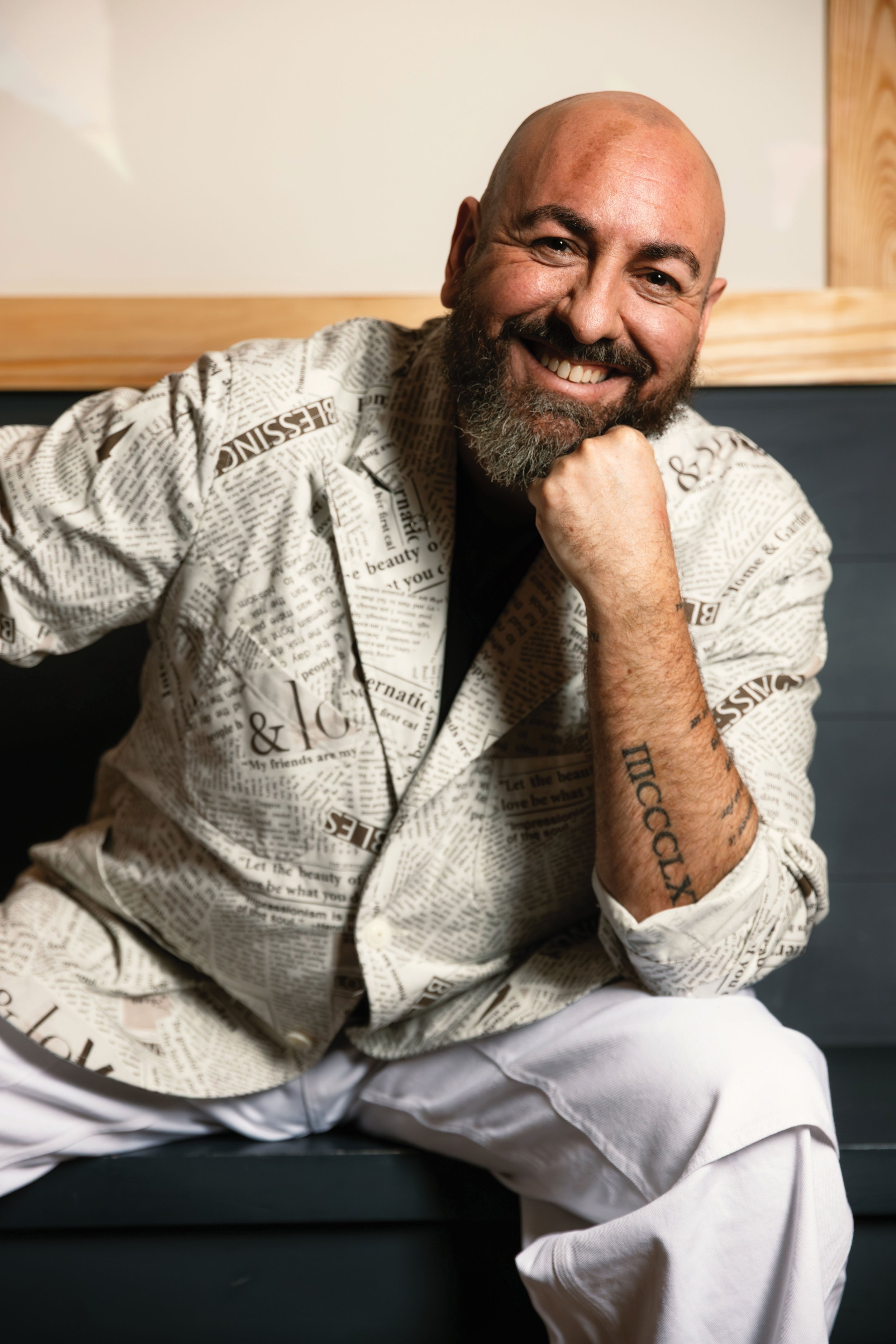
Shelton in Engineered Garments newspaper print blazer and white double knee “painter pant”
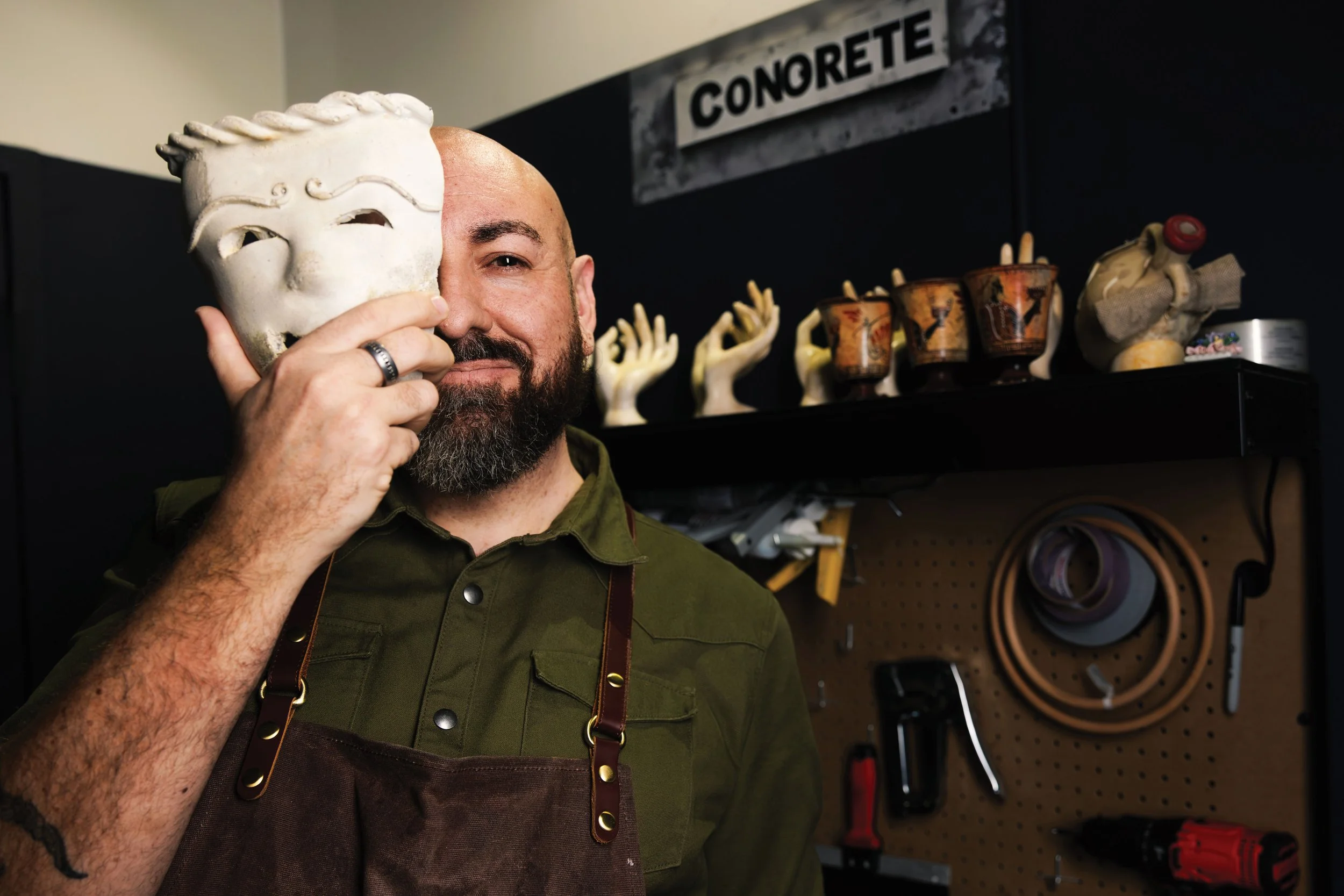
Shelton in the Merchant Roots workshop studio
BRANDON JEW
Brandon Jew opened Mister Jiu’s in Chinatown because the neighborhood is half the dish. The streets, the shops, the walk to dinner: all of it carries through into the food. He’s been asked to open elsewhere, but he shares why he’d rather stay.
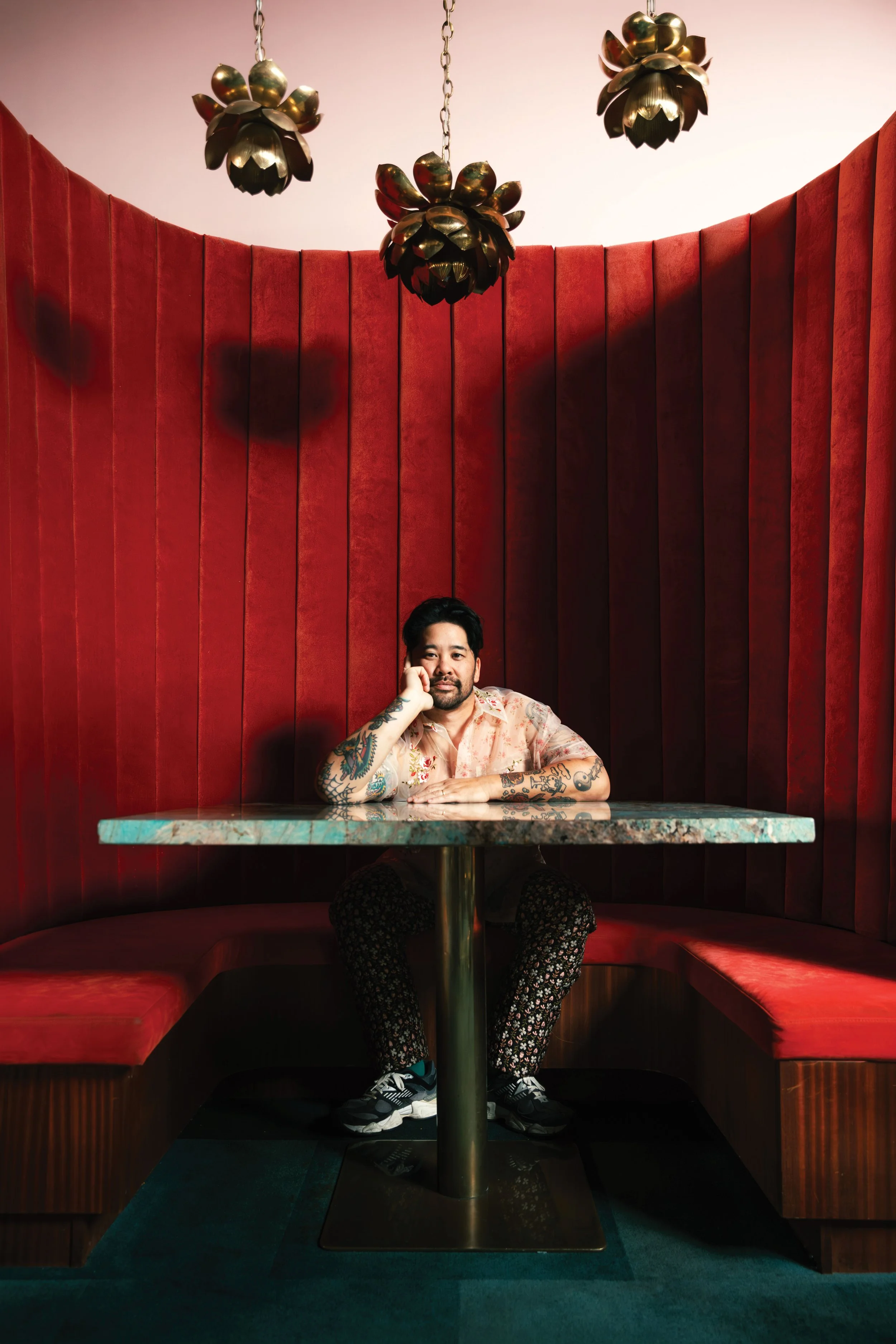
Brandon Jew at Mister Jiu’s wearing Simone Rocha sheer organza embroidered shirt, Walter Van Beirendonk floral print jacquard trousers, his own New Balance sneakers
Sonya Yu: For a long time you were searching for who you were, between American and Chinese identities. What did you find?
Brandon Jew: I was trying to learn what my identity was. I could see photos of myself looking like I’m trying to be more American or more Chinese, in ways that I was just really searching for where does this all settle in for me. My food and my culinary journey has helped me understand that. Even when we first opened Mister Jiu’s, I think I was cooking more for what I thought the perspective of people wanted from me. Instead of trying to figure out what side I belonged on, I came to peace with being OK about being in the middle. I came to realize there’s actually a community there. Representing that community, being in between, is actually where I belong.
SY: How does your cultural identity show up in your process in the kitchen?
BJ: I think with banquet dining and celebrating a larger format—a whole duck, a whole fish served—these things that feel celebratory. The food is the centerpiece, but it’s actually who you’re dining with and how you’re interacting with them and the food. In my family, all the good times and bad times happened at the dinner table. Celebratory things, serious conversations, they all happened there. Food was the icebreaker.
SY: Why does Mister Jiu’s have to be here, in Chinatown?
BJ: A lot of Chinatowns I had visited, you kind of see that they’ve almost become a museum. They’re not active. The lifeblood of the current day Chinatown … people aren’t living there, they’re not filling the streets, the sights, and the sounds, and the smells. [SF’s] Chinatown is still really vibrant. People have asked, “Open Mr. Jiu’s in LA or New York!” The beginning of coming here is to actually walk the streets of Chinatown to get here. And to leave walking the streets here, you just can’t replicate that in other places. I want that connection to the neighborhood and to have people experience Chinatown, not just our restaurant. Be able to walk these streets and understand what has happened here.
SY: What rituals and traditions show up in your work?
I shop the Berkeley Farmers Market twice a week, religiously. I want to be in touch with what’s happening within the season. Most of the food I had in China was 90% vegetarian, because meat is still a luxury in a way. The craftiness of being able to use that meat and have it really transport flavor across those vegetables … the utilization of flavor extends the usage of meat or ferments or aged sauces. A lot of historic recipes are rooted in Chinese medicine. Food is medicine in Chinese culture.
SY: Is there a space, whether psychological or physical, that you want to be in to get into your chef whites?
I usually get in my chef whites in the office. It’s definitely a time, especially between noon to 3:00 pm, where I’m interacting with a lot of people. So I’m getting my chef whites on in the office. There’s usually no one in there. I usually take a little time for myself. Even if it’s five minutes, [I] take a breath, think about what I want to focus in on for that night. I’m a very big believer in incremental success. Every day, just make it a little better than yesterday. Over time, it accumulates … if you feel less weighted with the idea that everything has to change, or everything is so far away from being where it should be. Let’s just take those incremental steps.
SY: What was it like being out of your whites today?
BJ: It was fun to be just a little free with it. Fashion was actually one of my early interests as a kid. I remember going to corner stores and going through magazines. But I didn’t have anyone in my circle, friends or family, who fostered that interest. It’s always been something I’ve been really interested in, but I never got into much more than just being interested in what people are wearing. Now I’m a pretty “black T-shirt, white T-shirt” kind of guy. I have my uniform. My socks are the most eclectic thing I’ve got these days.
SY: What does legacy mean to you?
BJ: It’s a question I asked myself mostly for my career, wanting our restaurant to be impactful. I almost felt like I had to prove a point about the value of Chinese food. When I had traveled to Shanghai and Hong Kong, the reverence of Chinese food was a lot different than how it was in America. Now that I have kids, I think of the things I want to leave with them. Probably the most important thing is my love for them. If I’m gone, what I want them to remember is that I loved them very much.
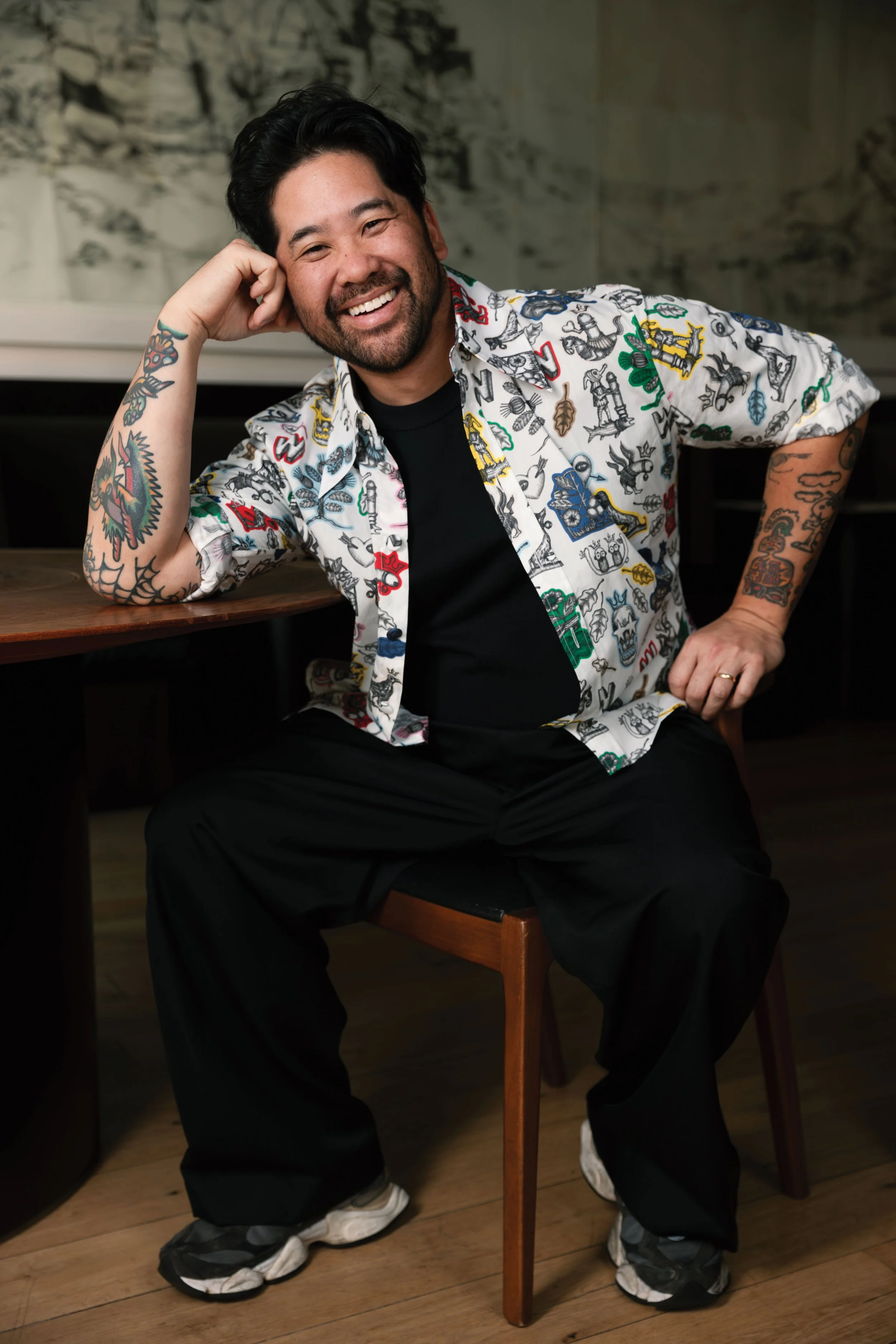
Brandon is wearing Walter Van Beirendonck graphic button up, Simone Rocha trousers, Jew’s own New Balance sneakers
“I came to peace with being okay about being in the middle. I came to realize there’s community there.”
—Brandon Jew
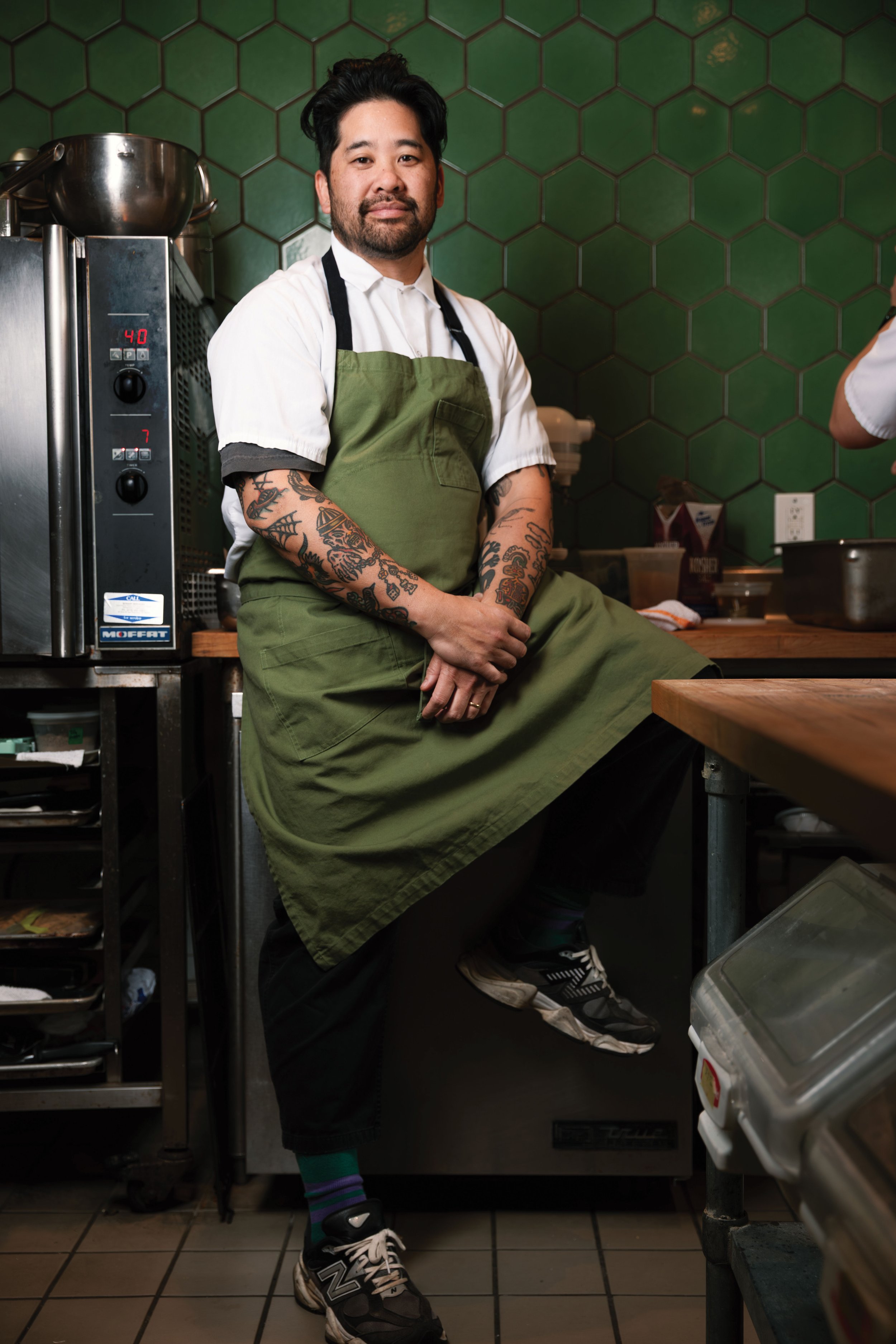
In uniform in the Mister Jiu’s kitchen
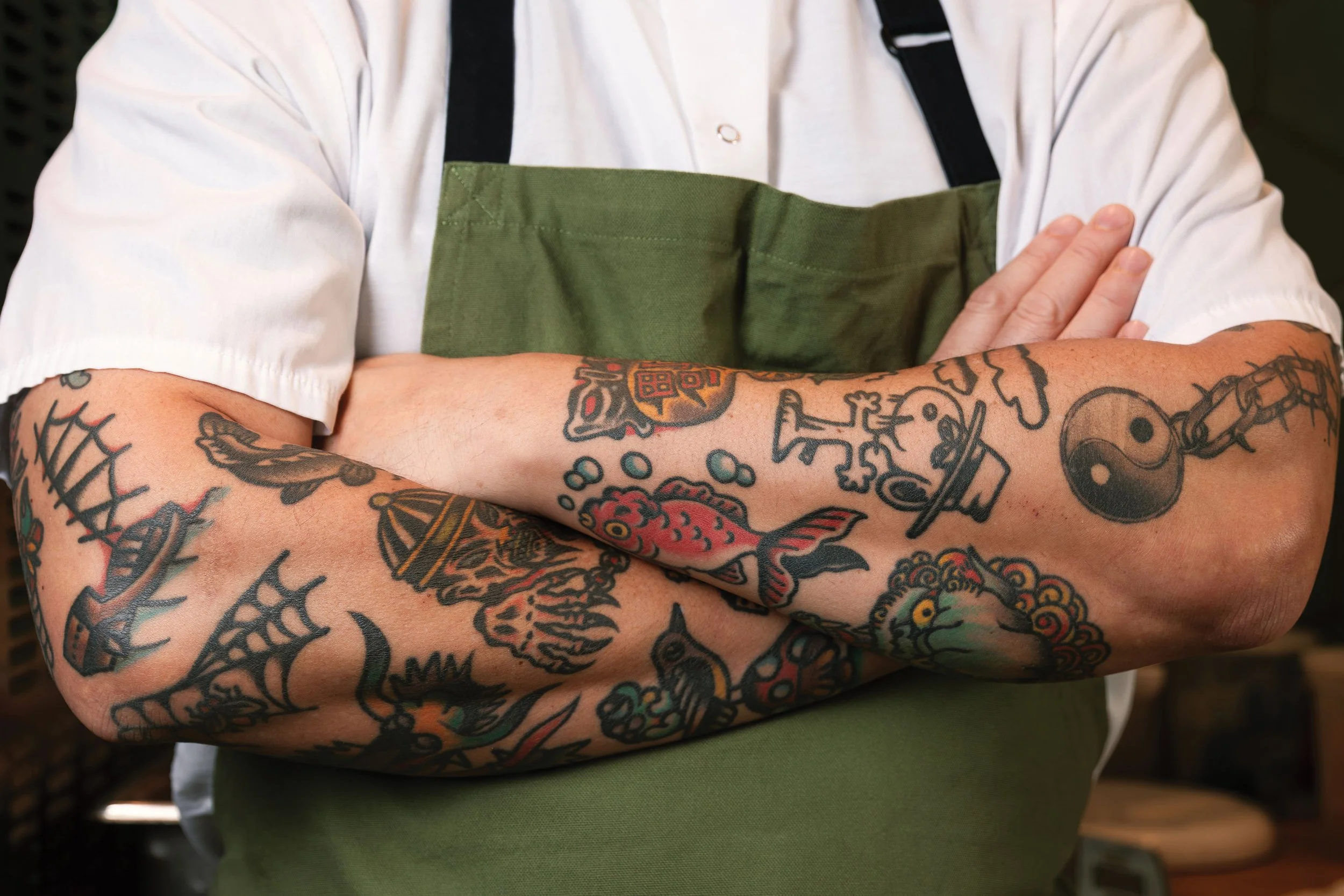
Ready for service