
Last Reservations
Inside the Bay Area death cafe: cake, candor, and mortality
WRITER Melody Saradpon
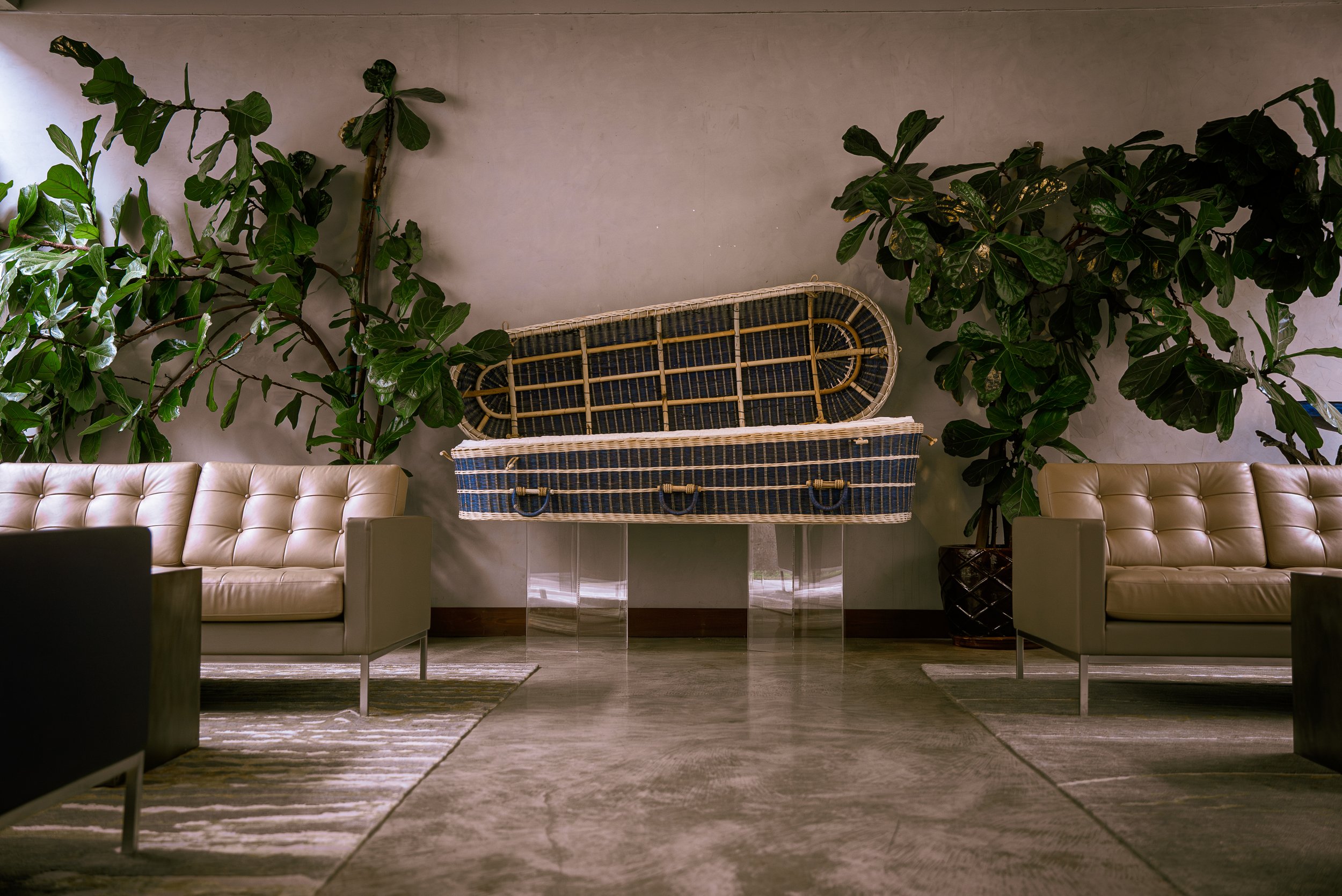
Fernwood interior—photo courtesy of Daniel Waynick
Located in the South Pacific Ocean, on southern Pentecost Island, Vanuatu, stands a 90-foot-tall wooden tower built to face death. Since time immemorial, the tower has been erected every year as a rite of passage for the young village men—constructed by hand with no safety net or harness. The ritual is stark in its simplicity: Nearly naked other than two liana vines tied to the ankles, the men climb to the highest platform and plummet to the earth, arms crossed and head tucked, vines snapping taut to stop them just before their shoulders gently graze the mud below.
The night before, each man settles his personal affairs and disputes in case the jump goes poorly.
This ritual—the naghol, the land dive—is one of the oldest rites known to man. Its logic is ancient: a structured rehearsal of death to approach it on our own terms, and to return to the living a little differently than how we arrived.
Many cultures had their own versions of this: Spartans sending their young boys into the dark wilderness without food or shelter, the Japanese samurai rehearsing their own deaths upon waking to remove fear. The impulse to test our relationship to death is a human one; to sit close enough to feel the gravity of it, and to discover (with relief) that we can live more fully in the presence of it than we ever could in its absence.
Today, the modern Western world has little room for this impulse. Death has become the last great taboo; it’s kept from the dinner table, too dark, too final, and too impolite for ordinary conversation. We stopped making room for this kind of courage, outside of the institutions designated to handle it on our behalf.
But quietly, in the Bay Area, that’s beginning to change.
The death cafe—originated by Swiss sociologist Bernard Crettaz’s first café mortel event in 2004, carried to London by Jon Underwood in 2011, and now present in over 80 countries—has taken root here: in Oakland living rooms, San Francisco libraries, and on a Sunday afternoon, inside a cemetery in the Marin hills. The premise is disarmingly simple: Strangers gather over food and tea, no grief required, to talk about the one thing we will all ultimately experience.
Death. The one reservation none of us will miss.
To arrive at a death cafe is to make a small, private decision—one that feels, absurdly, like it might have superstitious consequences. As if you weren’t already mortal before you pulled into the parking lot. I remind myself of this as I arrive at Fernwood Cemetery, a Mill Valley green burial ground founded in 2005*, hosting death cafes for the first time this year.
Both the cemetery and the death cafe offer a return to old rituals. Green burials give the body back to the earth as naturally as possible, the way humans did before the industrial funeral. The cafe does similar work, above ground: recovering an older ritual of holding council, of speaking about death plainly.
Sonia Getz, Fernwood’s funeral arranger and communication specialist, meets me at the parking lot gate, unhurried. I’ll learn later that she’s turning 26 this year—young to be tending the dead, though her friends, she says amusedly, find her work enviable. She was drawn to it herself by a fascination with the unknown.
“One of the most interesting things about life,” she tells me, “is what we don’t know for certain, what we can’t see, the mysteries.”
She directs me to the building where the monthly death cafe is held—fittingly, the Remembrance Room—where I’ll meet 20 others, identified only by name tags. I step inside: limewashed walls, concrete floors, warm wood detailing, and floor-to-ceiling windows open to a garden with a cascading waterfall view. More modern art gallery than death parlor. In the center, a large ring of chairs, turned inward, with a sideboard of homemade cakes (banana walnut and chocolate mint) and small consolations, set like a birthday party.
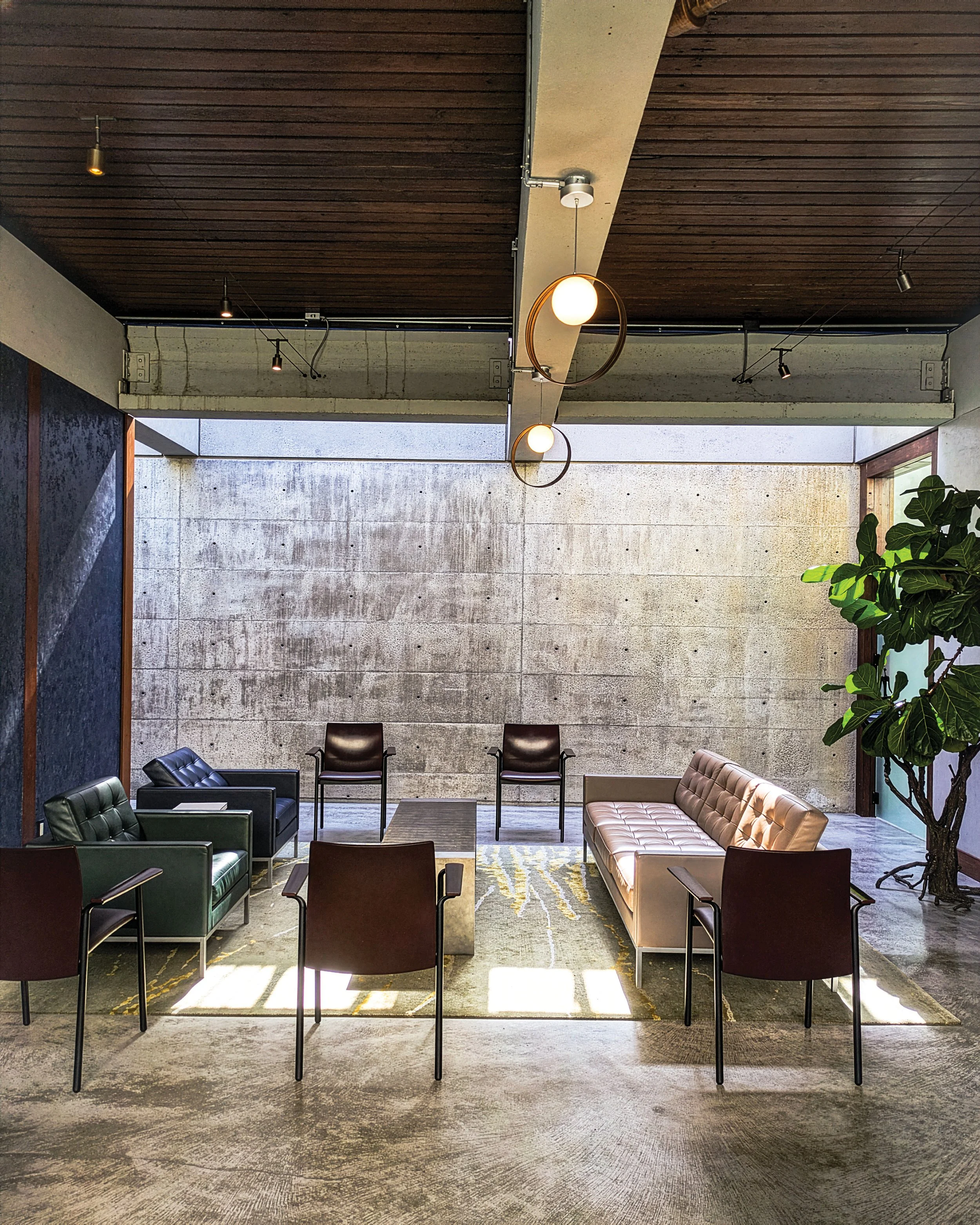
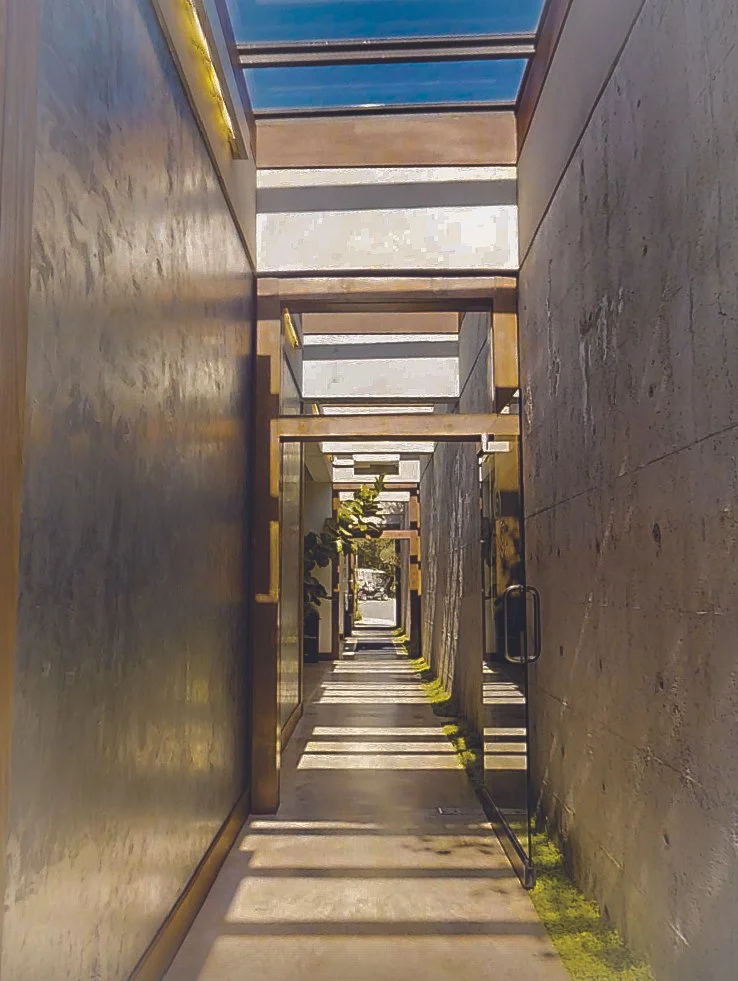
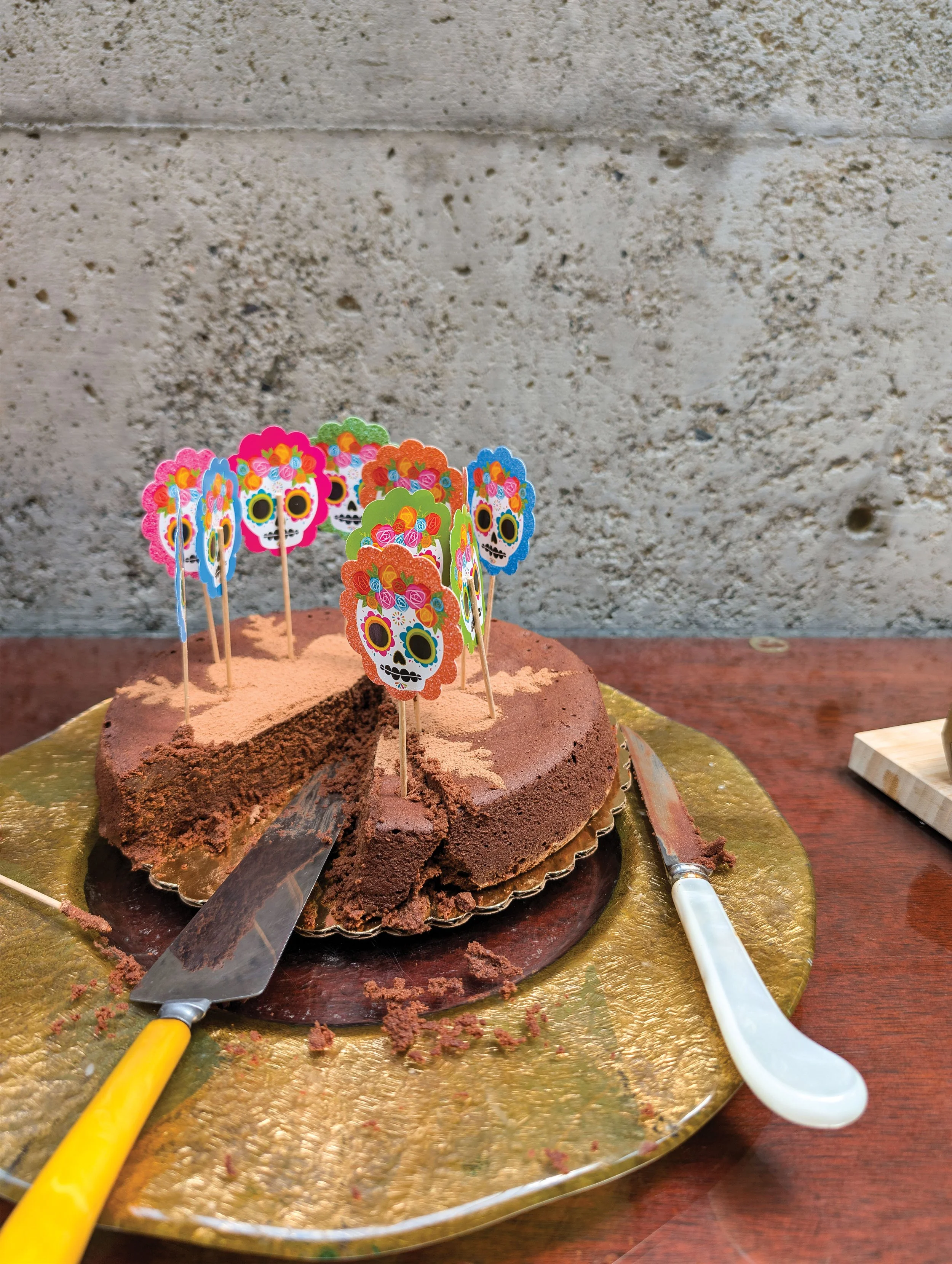
Ahria Wolf, the death cafe facilitator, greets me warmly as if we’re resuming a conversation. Her voice carries the weighted calm of someone who’s spent a lifetime close to the dying: A seasoned psychotherapist now in her early 70s, she began as a nurse at 19 and, in 1981, joined the team that opened one of San Francisco’s first hospices. As I take a seat, I introduce myself to several strangers: a mortician-in-training, a retired businessman, a married couple, and a pediatric nurse.
Ahria opens the circle, gracefully. There is no agenda, she says. No advice to give or receive, no therapy or counseling. We’ve gathered only to speak of death plainly, and with curiosity. We may say everything, or nothing at all, she finishes as she lets the silence settle.
The first to speak is a man who cheerfully introduces himself as a death doula and LGBT counselor. He’s prepared the bodies of many friends and family members over his 53 years on earth—an incredible honor and one he suggests every person experience at least once—and has grown to love Fernwood’s death cafe; he’s already reserved his final resting plot outside the window.
The room erupts with laughter, and it’s genuine; another quips that you can’t spell funeral without the word fun. The same person is planning a living wake, a celebration of life thrown before death rather than after, with a DJ set. They have also begun rehearsing their own death by lying, now and then, inside their custom casket.
Then a woman speaks about her young daughter, who passed unexpectedly at home. What she carries now is regret: In those first hours, she had not known she was allowed to stay with her daughter, to sit with her a while longer before the funeral home came. By law, families in every state may keep their dead at home for a vigil (for hours or even days) with no one to hurry them. She had been, she says, death-illiterate: in its rites, in the quiet permissions that still belong to every family.
What stays with me is how easily the death cafe conversations moved between laughter and tenderness. When I ask Ahria about it afterwards, she says, “It’s a communal ritual of coming together. And having an intention, to talk about what has previously been taboo in an open, non-pressure, non-agenda way.” She laughs. “You’ve got to have laughter with it. That’s part of the human condition.”
When I ask if she thinks it’s a passing trend, she calls it something else.
“I think it’s part of a movement to bring the experience of death back into communal life and out of the medical institutions. We’ve had a body-positive movement; I think we have a death-positive movement happening.”
Finally, I ask Ahria what a lifetime spent close to the dying has taught her about being alive.
“We’re afraid of death,” she says. “It’s unknown exactly what that is, what happens after this body stops. But the fear of not really having lived our life fully is actually our deepest fear. And that’s what death is here for. It reminds us that this is precious. This is finite.” Then: “How can we allow ourselves to live our most full, beautiful life?”
Ahria doesn’t offer a tidy answer, and I don’t think she means to. When the death cafe circle breaks, people linger over the last slices of cake, peel off their name tags, and drift back out past the graves to their cars. I do the same. We walk back into the afternoon a little altered, the way you do after any ritual that faces the end: having rehearsed the ending once, so the rest of life might finally begin.
Death cafes are free, volunteer-led, and open to the public. Fernwood Cemetery in Mill Valley hosts one on the third Sunday of every month. A directory of cafes worldwide can be found on deathcafe.com.
*July 2026 edit: Fernwood Cemetery was established in the late 1800s, but recognized as one of the country’s first dedicated green burial grounds in 2005.