
Invisible Connections
The microbes that bind us
WRITER Maria C. Hunt
PHOTOGRAPHY Will Basanta, Azikiwee Anderson, Kim Wejendorp, Sarah Lyon
Photo—Will Basanta
They weren’t actually trying to make a kombucha that tasted like skin.
But if you wanted to make a spontaneous kombucha SCOBY, what would it take? Kim Wejendorp, a research and development chef in Copenhagen, devised an alchemical mix of ingredients: a dried sunflower, a dead bee, raw honey, green tea, and a piece of his skin. The mixture fermented into kombucha, and formed a pellicle (the fibrous layer that floats over a kombucha) that made more batches of kombucha served at the former Amass. “The thing with fermentation is the results are often magical, but it isn’t magic,” Wejendorp says. It’s just science that highlights the role of invisible microbes that shape our culinary world, creating flavors and textures we love in wine, kimchi, and sausages, while also supporting our health.
Wejendorp chose the ingredients for his weird brew because they all carried tons of microbes. Flower pollen is laden with microbial communities, and they receive more from visiting insects. Food-seeking bees buzz from rose bush to berry patch to backyard barbecue leaving microbes behind. They’re also fermenters, creating a nourishing fermented mix of honey, pollen, saliva, and wild yeast called bee bread. Raw honey carries dormant microbes that come alive in liquid, and human skin carries a microbial signature.
“This is not magic, but … this was destined to happen,” says Wejendorp, head R&D chef at BRITE (formerly Sustainable Food Innovation Group). “If … all the kombucha in the world disappeared today, it would probably turn up again.” The experiment proves fermentation can happen anywhere microbes gather. Which means that even refined drinks, like wine, are just controlled wildness.
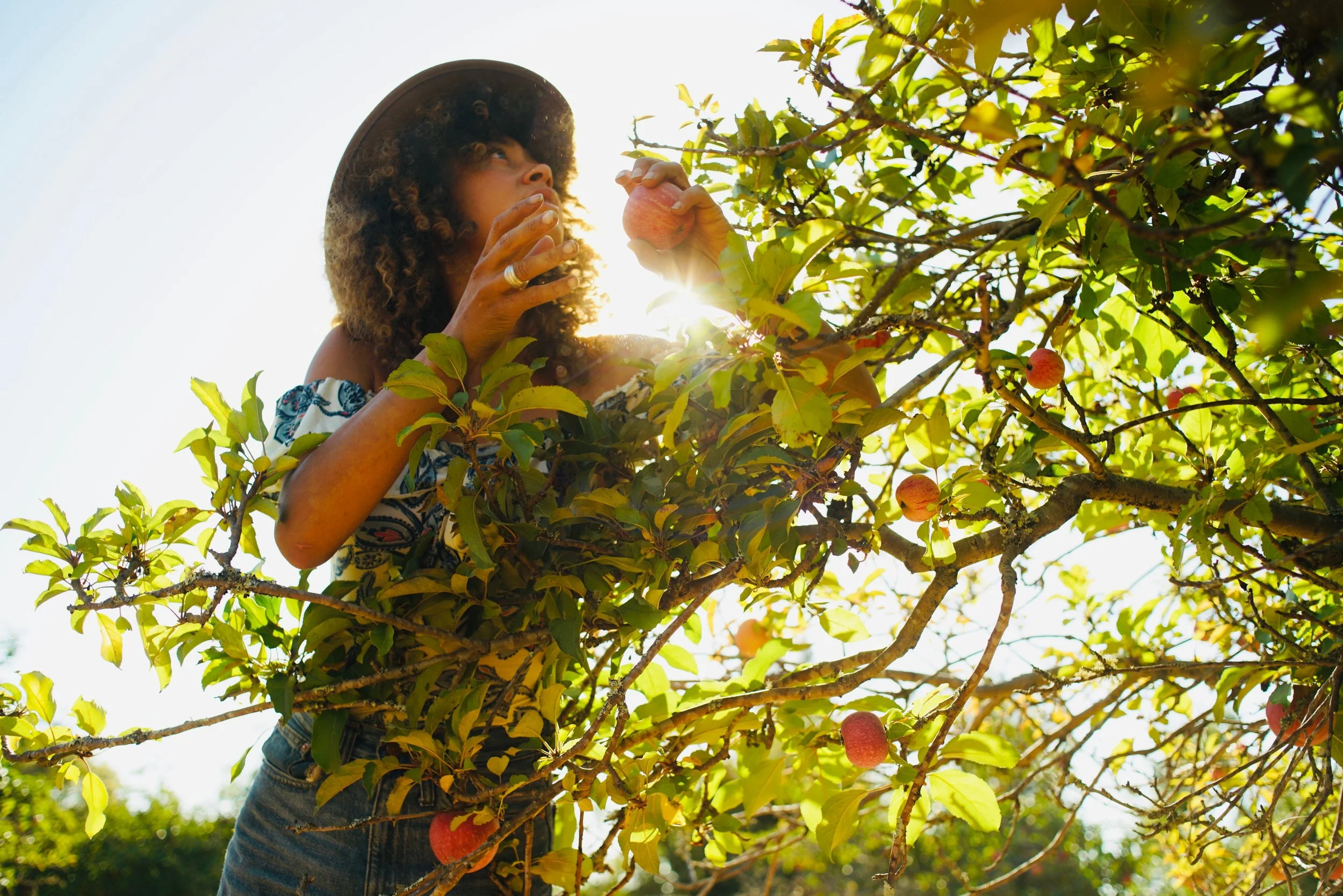
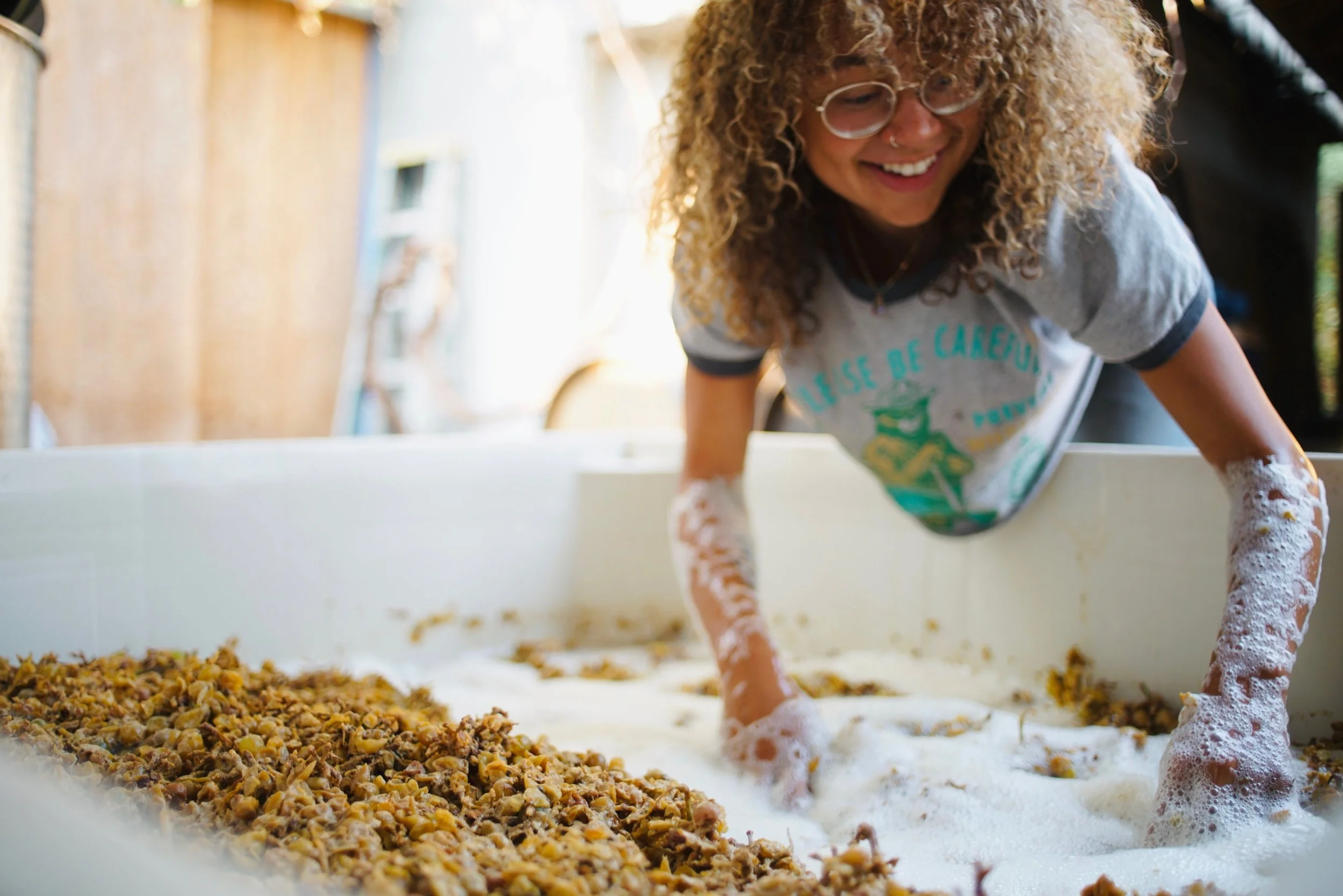
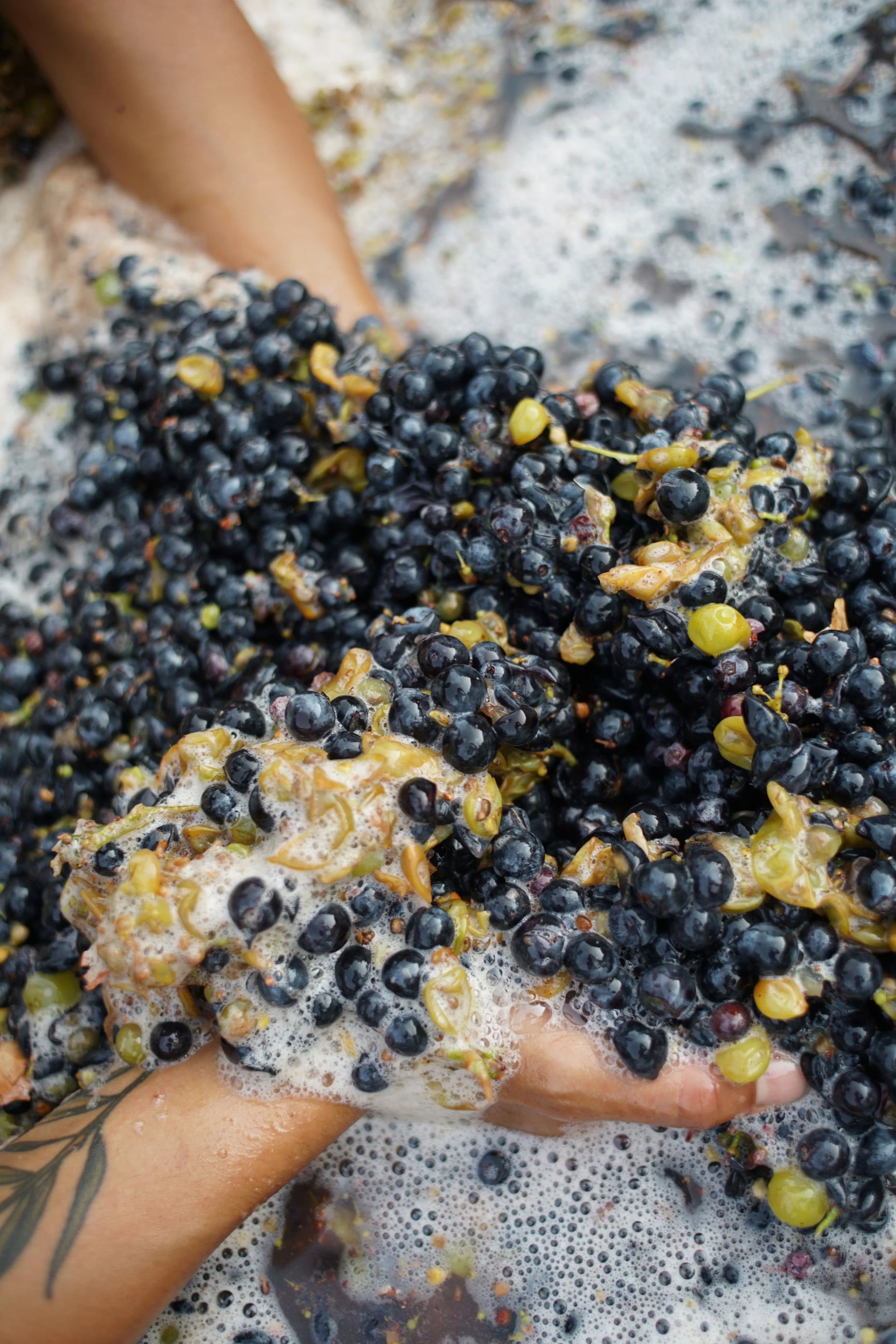
Intentional winemaking in qvevri clay amphorae dates back 8,000 years in Georgia, where Eastern Europe meets Western Asia. But the first wine was almost surely an accident, since the grape is a perfect fermentation vehicle, says Chenoa Ashton-Lewis, winemaker and co-owner of Ashanta Wines in Sebastopol, California.
“Grapes are incredible. They actually want to turn into wine very quickly,” she says.
Crush grapes slightly, the sweet juice flows, and wild yeast microbes on the grape skins and in the air gobble up the sugar, producing alcohol, heat, and carbon dioxide gas. Ashton-Lewis shapes her fermentation by making sure she’s sourcing fruit from a healthy vineyard that’s teeming with beneficial microbes. That’s why she avoids vineyards sprayed with pesticides or weed killers that destroy the microbial ecosystem. To expand the range of textures and flavors, Lewis co-ferments red and white grapes together, like the Merlot, Chardonnay, and Pinot Gris mix in her wine called Saudade. Some of the fruit comes from a vineyard her grandfather owned in the 1980s, so the Portuguese word for nostalgia was a fitting name.
She also makes still and sparkling wines with grapes or apples mixed with foraged fruits like feijoas, wild elderberries, or plums. These diverse fruits bring their own microbes plus novel flavors to the mix. Discovering fruit that’s just waiting to be picked feels like a gift from nature; and reminds Ashton-Lewis of when people home-brewed fruit wines to share with their family and neighbors.
“When you work with a different fruit that’s wild and feral and abandoned, you’re tapping into a different part of you,” she says. “This species has been making some sort of fermented beverage for so long. It connects you back to humanity, your culture and community.” Fruit trees and vines aren’t the only natural actors sharing gifts with hungry and thirsty humans; even ants make important contributions to fermentation.
Want to make yogurt but don’t have any starter? Just find some ants. Ant yogurt is a favorite old-school recipe for Balkan and Turkish shepherds who start craving yogurt while stuck in the wilderness tending their flocks in spring. In 2023, University of Copenhagen researcher Veronica Sinotte took researchers to the Bulgarian countryside to see if tales about ant yogurt were true. Her colleague Sevgi Mutlu Sirakova grew up near there and knew that people still told stories about fermenting yogurt with ants, according to the published study in Cell Press.
Locals led researchers to a mound of Formica rufa, commonly called red wood ants. The researchers added four live ants to a jar of warm milk, covered it with cheesecloth, then buried the jar in the ant mound to keep it warm overnight. The next morning, the milk had started becoming yogurt. Research chef David Zilber, who was on the expedition, noted the milk “had a slightly tangy taste with mild herbaceousness and pronounced flavors of grass-fed fat.”
After making more yogurt with live, frozen, or dehydrated ants, they put a bug in the ear of R&D chefs at Restaurant Alchemist, a two-star Michelin in Copenhagen. The chefs fermented goat milk mascarpone with the pungency of pecorino and an antwich —-sheep’s milk ant ice cream sandwiched between ant-infused tuiles. Feeling thirsty? Then try the ant-milk-washed apricot liqueur and brandy cocktail. For years, scientists assumed it was formic acid—popularized in the 1954 giant ant horror movie Them!—that enabled ants to ferment milk. But now we know it’s the ant’s holobiont: its body and microbes.
And can you believe that the Bulgarian yogurt-making ants were carrying lactobacillus San Francisensus—the very same microbe that gives San Francisco’s famed sourdough bread its distinctive tang?
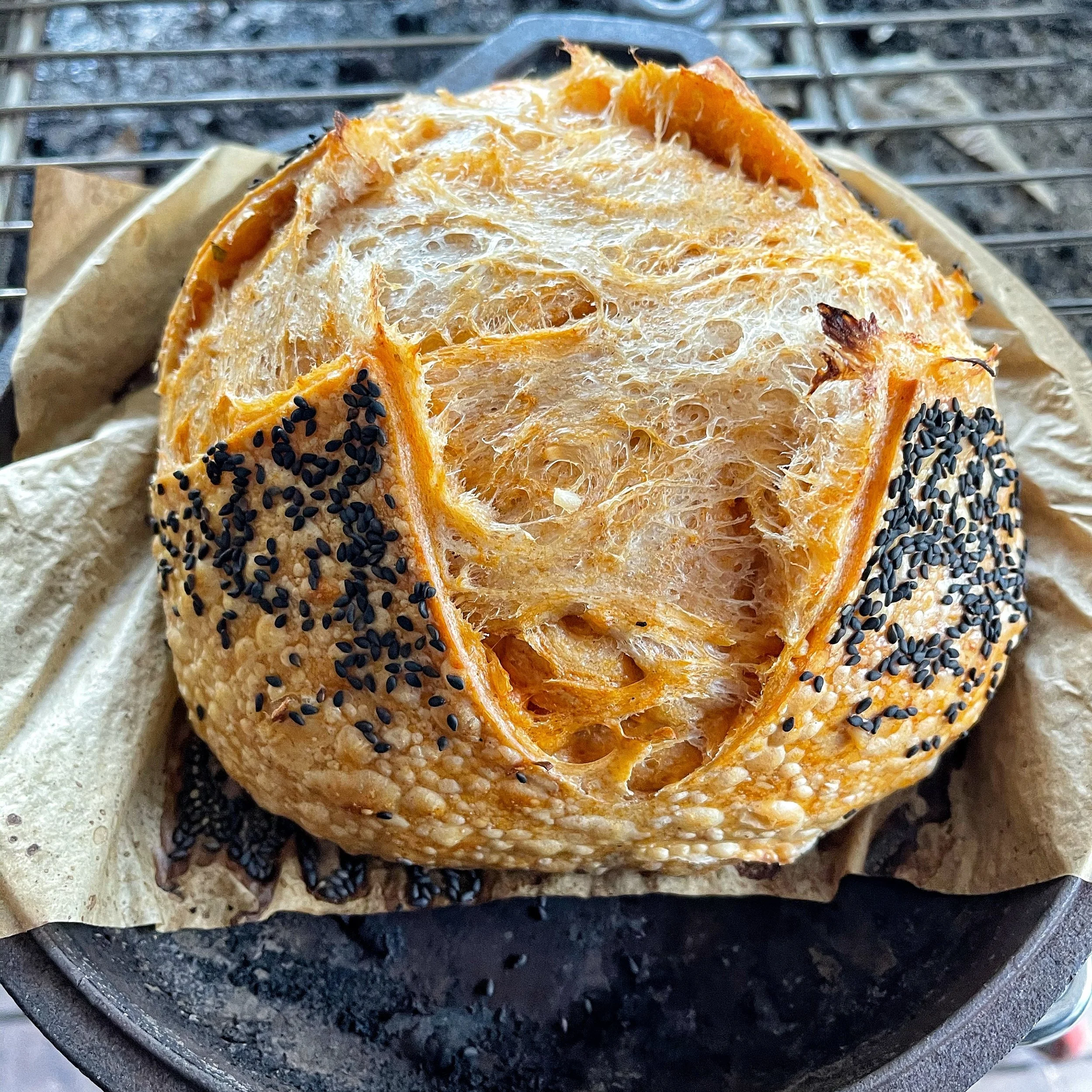
Sourdough loaf. Photo—Azikiwee Anderson
Biting into a warm, crusty, tangy piece of sourdough bread gives people pleasure, and creating that makes Azikiwee Anderson happy. When he started messing around with sourdough bread during the pandemic, he gifted loaves to friends. The bread was really a vehicle for creating connection. He expanded to selling loaves to his circle and social media followers. Eventually he opened San Francisco’s Rize Up Bakery in 2020, as a way to create community and healing the wake of racial injustices like George Floyd’s murder.
Anderson liked nurturing his sourdough starter like an edible Tamagotchi, and creating cross-cultural loaves flavored with purple ube yam, gochujang chili, and curry leaves. But he didn’t like touching the yeasty dough. “I was icked out by it,” he recalls. “I ain’t touching those creepy crawly things. I don’t want that stuff on me. The idea of putting my hands in it freaked me out.”
But he realized he already had plenty of creepy crawlies of his own. Walt Whitman got it right: We contain multitudes … of microbes. The average person is made up of 30 million human cells and 38 million microbes, according to a 2016 paper led by Ron Sender of the Weizmann Institute of Science. Anderson thinks about how each of us is engaged in a tug of war: Is our human self directing our decisions and moods, or is it the microbial community? Either way, every baker brings something singular to their bread. “What makes our bread uniquely our bread is what I call love, but you literally leave a piece of you,” Anderson says. “Every time you touch it, you give a piece of yourself to it.”
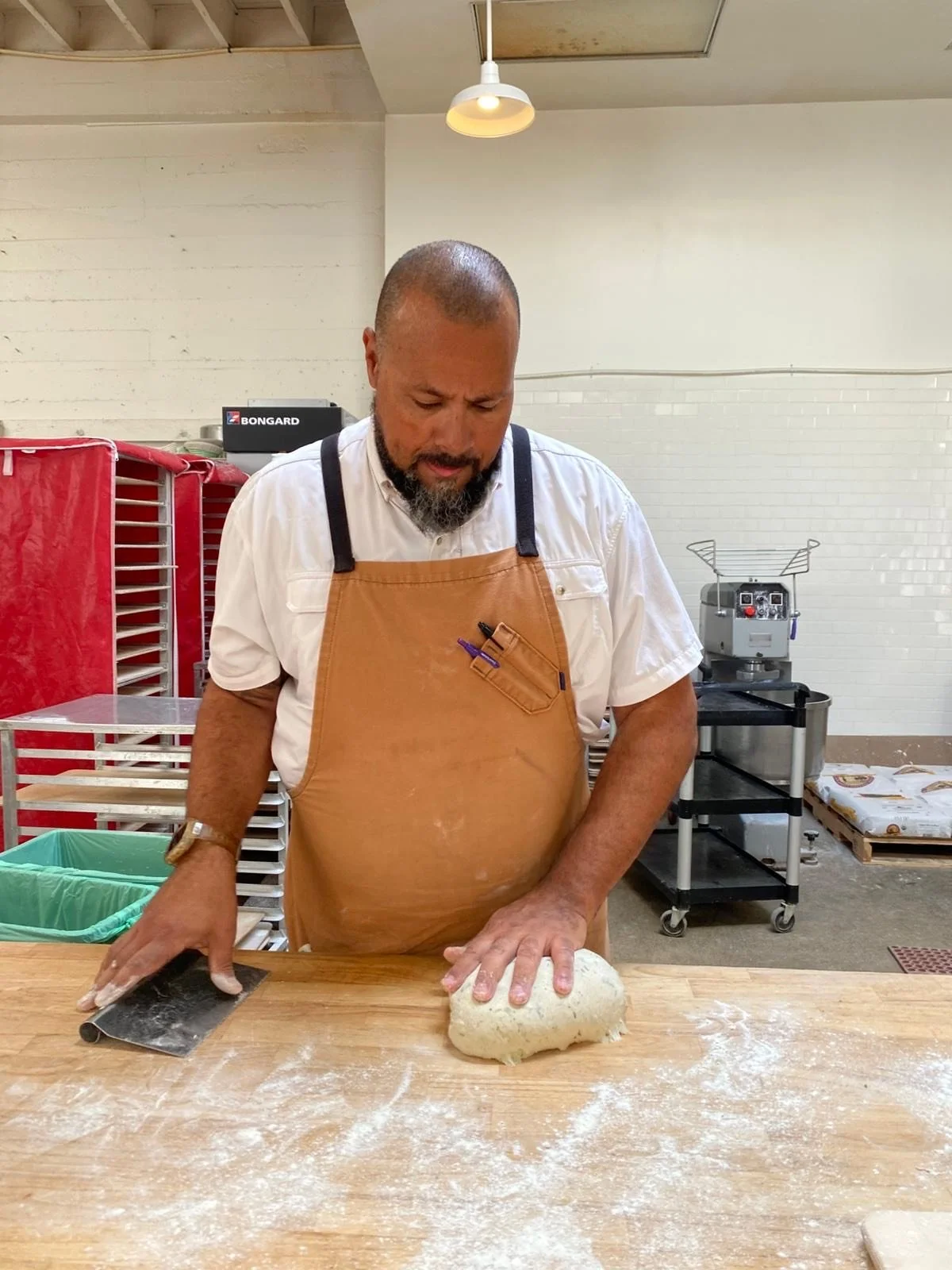
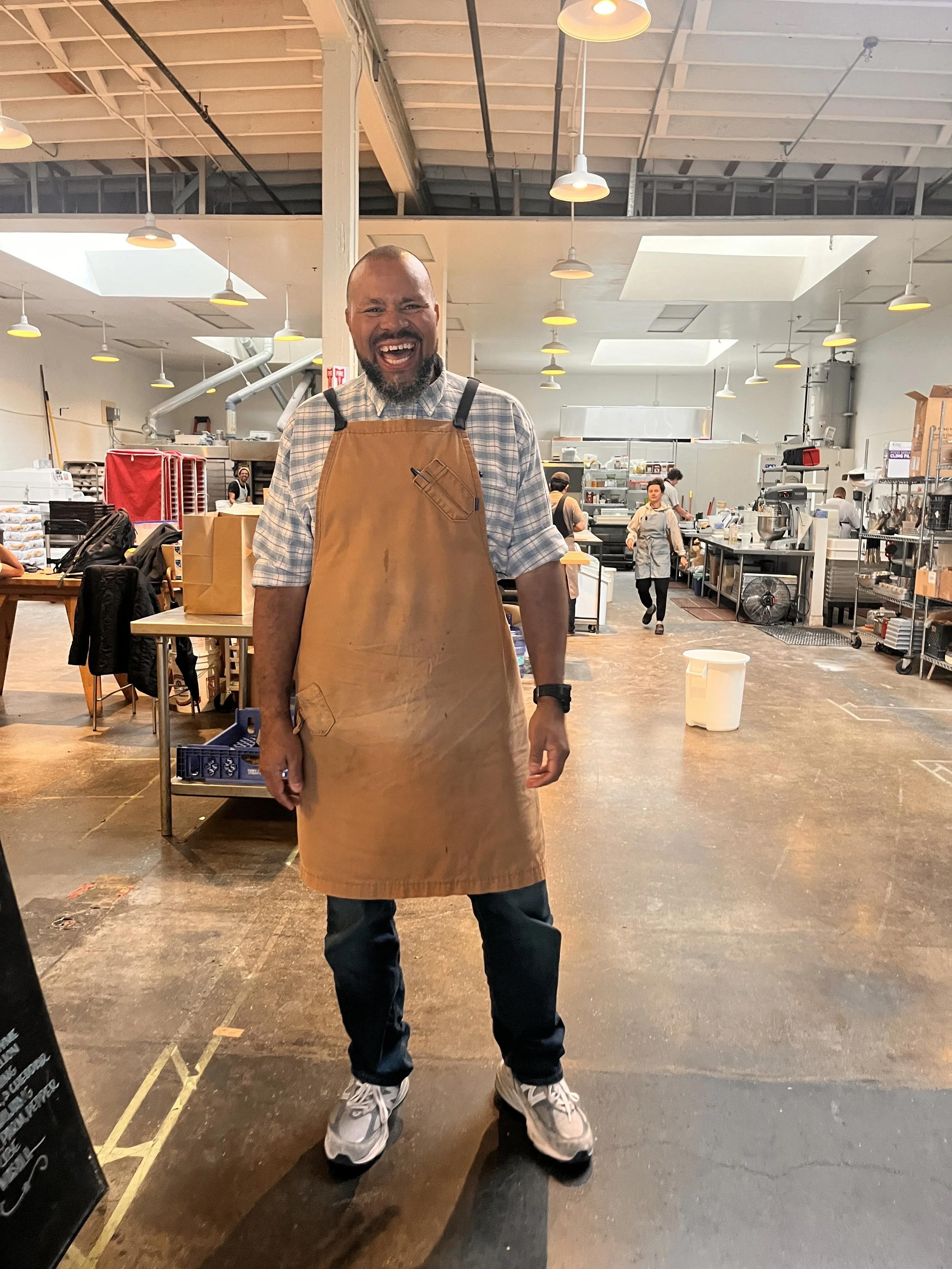
That’s not just baker woo-woo. Researchers in the Rob Dunn Lab at North Carolina State University gave bakers identical sourdough bread starter recipes, and then analyzed the microbial content of the batches. They found each baker’s starter mirrored the microbial community on the baker’s hands. And the finished loaves tasted different, with varying levels of tartness. It makes you want to buy bread from a happy, well-adjusted baker. Anderson believes the best-tasting bread comes from people who have their stuff together. “Happiness comes from the inside, and all that kind of starts with your relationship with yourself, your relationship to your environment,” he says. “You get an intuitive relationship with all the things around you and try to give the best you can give.”
Thanks to invisible microbes, sharing any fermented food—a loaf of sourdough, a jar of kimchi, or homemade kombucha—is a way of sharing yourself, and bringing more people into a circle with the natural world and a process as old as time.
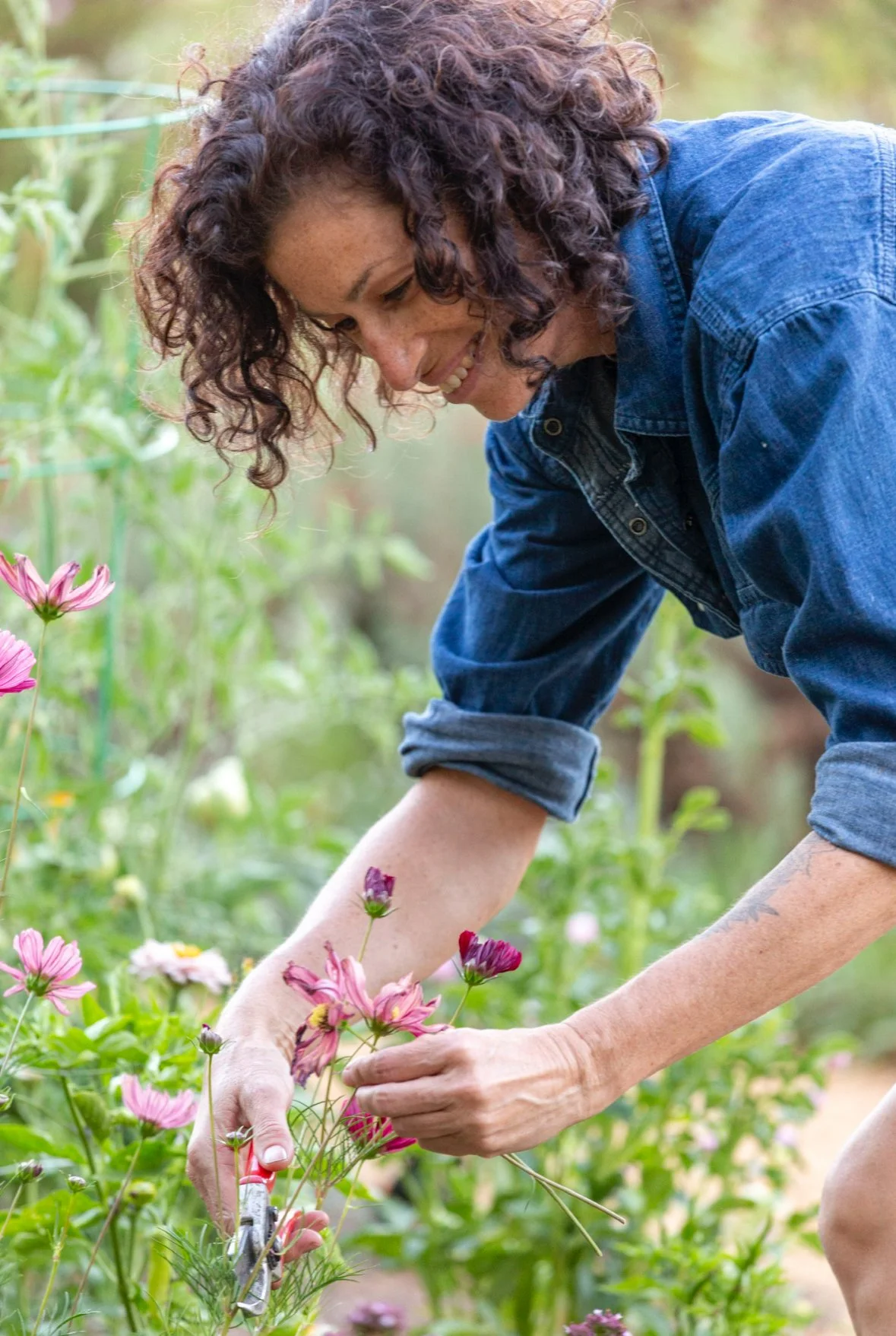
Sarah Owens. Photo—Sarah Lyon
For Sarah C. Owens, a James Beard Award–winning author and instructor of Ritual Fine Foods in Sonoma County, her passion for fermentation started in her garden. Cultivating roses was an antidote to her stressful work life in Brooklyn, and she poured herself into it.
She even traveled to the coast to gather seaweed that she mixed with sourdough starter, nettles, and molasses to make a preparation to feed her plants and soil. Fermentation broke down the nutrients in the ingredients, making them more available. At the time, Owens had digestive issues that forced her to give up eating bread with gluten, as well as commercial gluten-free foods. She realized her sourdough garden tea might provide what her body was missing too. “I was making compost tea and was brewing microbial teas to help plants get what they need from the soil,” she says. “Well, a sourdough culture is the same thing for humans and the digestive system.”
Owens started experimenting with long fermentations of whole-wheat dough to break down the gluten proteins and make them more digestible. Slowly, her body started to heal. Her exploration led her to baking with other grains such as teff, spelt, barley, and millet, and going beyond European loaves to fermented flatbreads. Her book Sourdough shares recipes for fermented dough desserts like lemon madeleines and chocolate buckwheat cookies.
As a rosarian and a lauded sourdough baker, Owens says the two pursuits are interwoven. Every loaf she makes evokes her connection to other people and nature, especially when she uses flowers to make a starter.
“When you’re using flowers to create a culture, whether it’s a sourdough starter or jun, you’re nurturing that relationship with the flower and the bees,” she says. “It’s a beautiful potential we have to create connections in a world where our attention is so preoccupied with screens and telephones.”