
Inherited Ritual
Lamees Dahbour inherited her mother’s “fingerprint” for Palestinian cooking. Passing it on is another matter.
WRITER Julie Zigoris
PHOTOGRAPHER Tri Nguyen
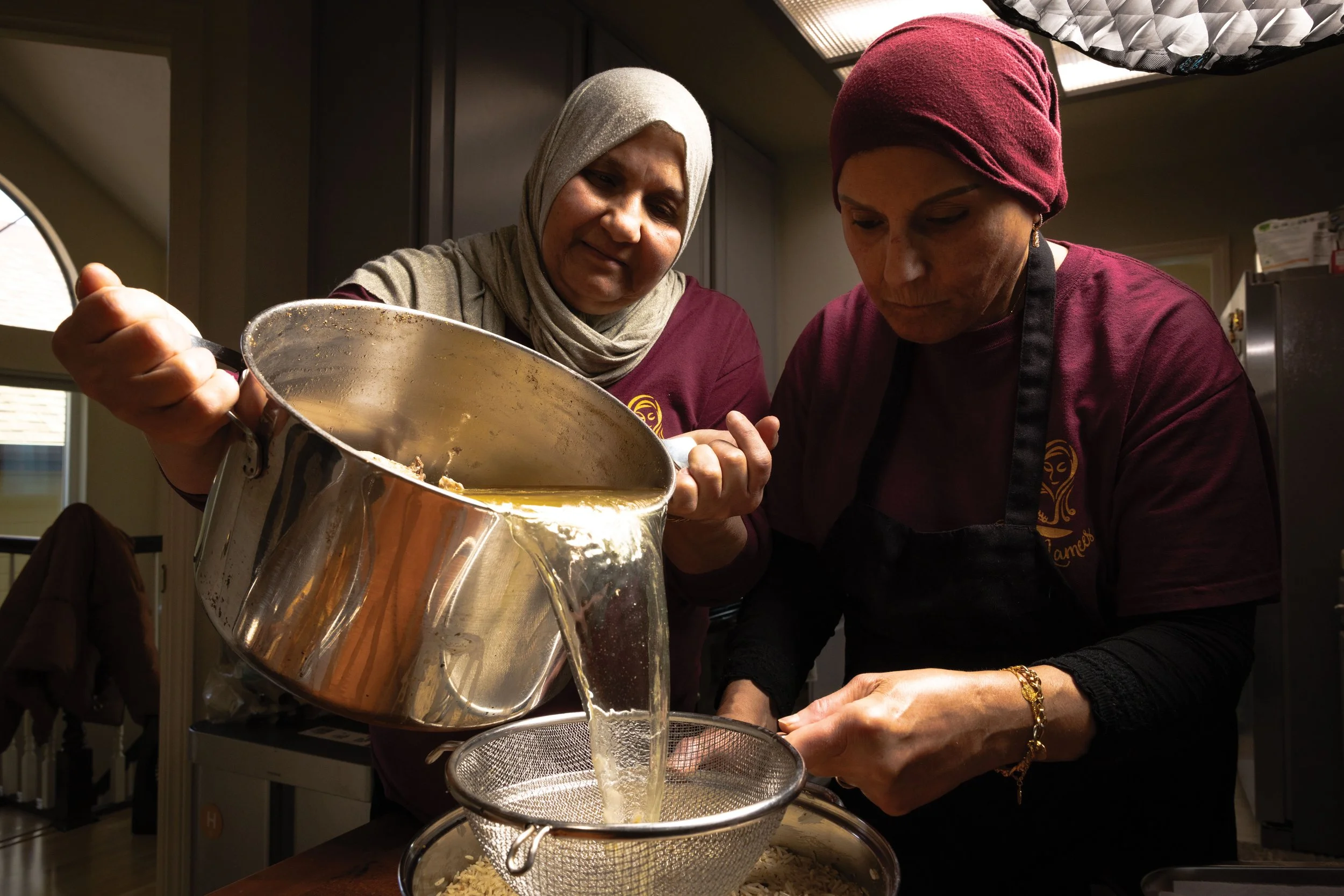
Chef Lamees Dahbour and her sister Chef Widad Hasan
Lamees Dahbour, owner of the catering company Mama Lamees, saved her family’s life by cooking. When her mother had a cesarean section with her tenth and last child, Dahbour stepped up to become the family chef at age 12. It was a role that came naturally to her.
“Since I was 8 years old, I sneaked into my mom’s kitchen and watched her,” Dahbour said. She particularly loved being beside her mother as she made bread, which they always crafted from scratch. “When you’re young, you think it’s kind of like a game, a toy.”
The daily ritual was a gift her mother gave her, a “fingerprint” that she inherited. The Arabic term baṣma is an expression used to praise the mark the best cooks leave on their food. Dahbour’s mother had this mark; in her kitchen in those many bread-kneading and herb-chopping sessions, she passed it along to Dahbour.
“I watched my mom, how she seasoned the food, how she cleans, and how she cooks,” she said. “She’s not rushing when she cooks. She cooks very patiently and we believe if you cook slowly, the texture, the flavor turns out to be amazing.”
Her customers agree. Mama Lamees topped “best new restaurant” and “must-try dishes” lists in the San Francisco Chronicle and Bon Appétit. When Dahbour recently catered an event for SalesForce, she said the vendor was so satisfied with the quality they decided to order breakfast, lunch and dinner for the entire week.
The “Mama” in Dahbour’s business name does not seem like an accident. It’s an homage both to the maternal inheritance and also symbolic of the love and care she puts into her cooking. “Her preparation and spices do not change,” said her daughter, Lubna Tanatrah. “She treats her customers like she’s feeding us. That’s what makes her unique.”
But it doesn’t apply only to the cooking itself. “Other businesses do shortcuts,” Tanatrah said. “She cleans the kitchen from the bottom of her heart.”
Tanatrah never felt as if she inherited her mother’s fingerprint; and she knows the kitchen is not the place for her—unless she’s enjoying the results. “The spices, the herbs, the chicken cleaning and everything, it takes so much energy,” she said. “I’d rather eat the food.”
It’s a different story with Dahbour’s son, Tahseen Tanatrah. Dahbour fell ill when she was signed up to do a big catering job for the eighth-grade graduating class at Sacred Heart. Her son—by that time a college graduate—came up to her and said, “Relax, Mom, I got this.” The event went off without a hitch because he had inherited Dahbour’s abilities. He had been interested in cooking since he was young, always beside his mother in the kitchen prepping and peeling and chopping just like Dahbour did with her own mother. “It is kind of like transcribing from one generation to another, the whole thing is being transferred,” she said.
Cooking might have been a way to save her family, but it also became a way for Dahbour to save herself.
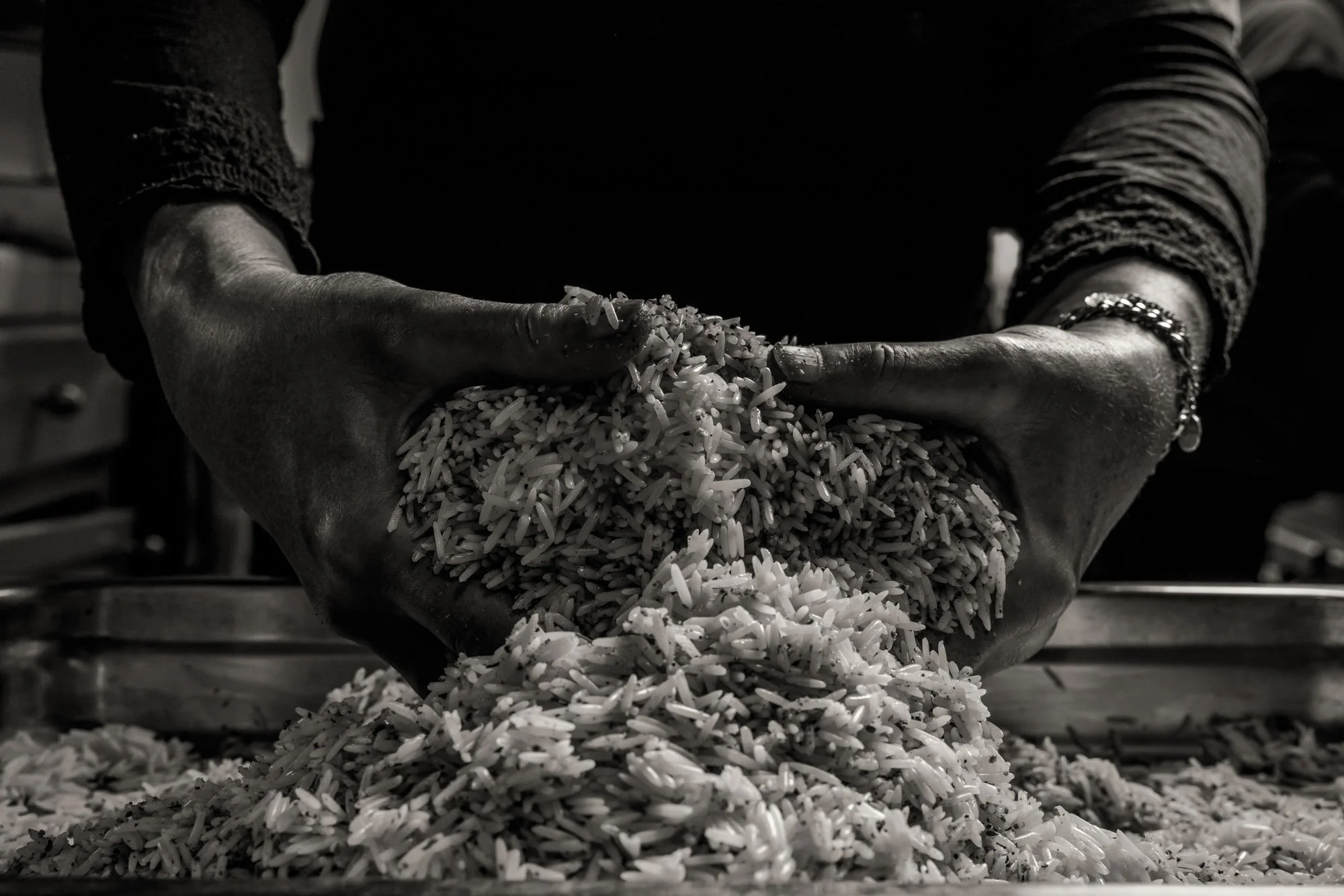
Rice preparation
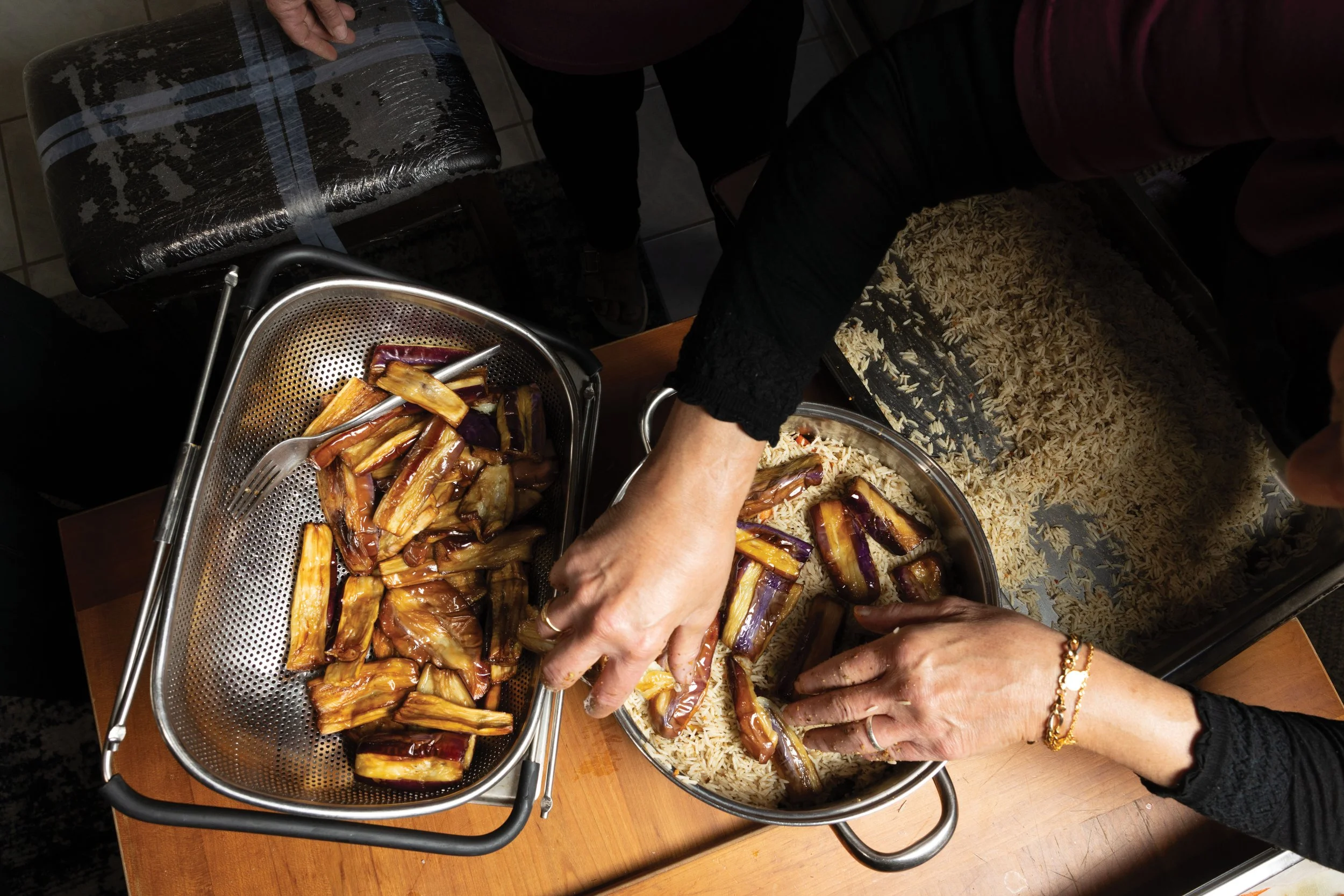
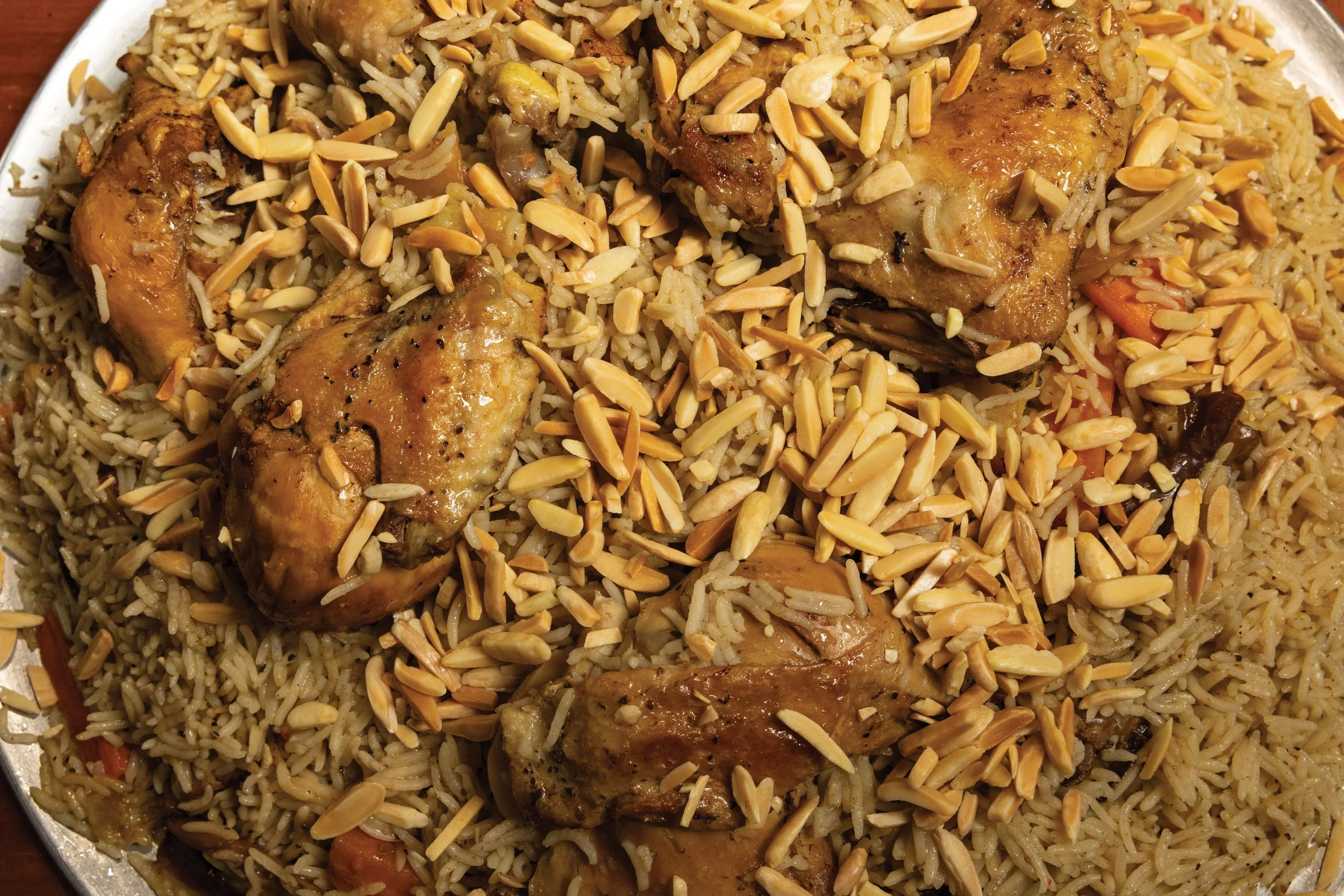
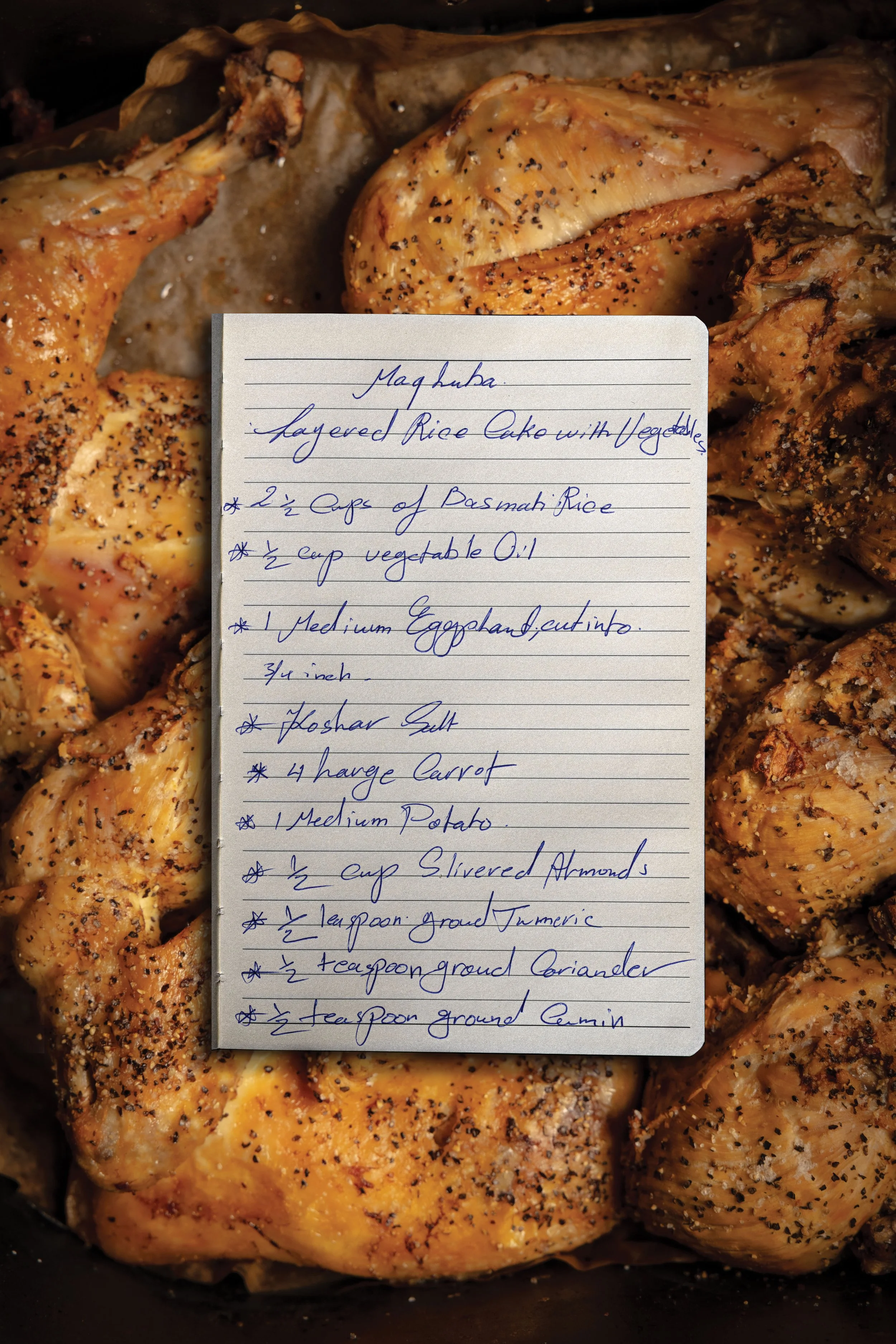
Lamees’ handwritten chicken maqloubeh recipe to follow
Born in Kuwaiti, Dahbour was arrested by both Iraqi and Kuwaiti governments during the Gulf War and briefly imprisoned. Then she fell into an arranged marriage marred by domestic violence. She moved to the U.S. with her husband and three children in 2005, mustering up the courage to divorce him in 2006 after years of abuse—which led to her being shunned by her family. “Being divorced in our culture brings shame,” she said.
Dahbour worked in administration for the Consulate of Yemen in San Francisco and was struggling to make ends meet on a tight budget.
“We barely had money just to go to McDonald’s and get the one dollar menu,” Tanatrah said. “Then we went home and opened the paper bag and sat on the chair and a green mattress.”
Yet getting out of her failing marriage led to her children’s academic turnaround in school, and she wanted to do a special thank you for her daughter’s middle-school graduation. Unable to come up with the money for the gifts Tanatrah requested, Dahbour made an innovative proposal: She’d invite the whole staff over for a big meal of traditional Palestinian dishes.
“They were, like, ‘Are you freaking crazy, sitting behind the computer doing work for someone, and you are so talented? There is no food like that in the Bay Area,’” she said. “And the story started.”
The property manager of the low-income housing complex where she was living helped her to write a business plan for the local food incubator La Cocina in 2015—and her catering company took flight. She never returned to administrative work again.
Dahbour’s kitchen is full of prayers, and she believes that food is a gift from God. She also hopes that her faith might bring her a blessing in the future: a place of her own. She’s been working out of catering kitchens since leaving her brick-and-mortar space at the Emeryville Public Market in 2021.
“I wish, I wish I had my own spot,” she said. “That is my dream until I die.”
As for Dahbour’s son Tahseen, he may work at Genentech but he is also a chef. He completed his food safety certificate, and Dahbour knows she can rely on him to carry on the ritual of their shared love of Palestinian cooking.
“He is exactly like a copy of my fingerprint,” she said.
Find Lamees online at mamalamees.com and on Instagram